
First time manager training that proves the manager can manage
Most first-time managers in India get a title, a team and a two-day course. Then they go back to doing the work themselves. Our first time manager training runs for three months instead. It starts with a DISC baseline, builds the habits in a two-day workshop, and then applies them month by month on the real team. Finally, the reporting manager endorses a proof of capability.
19+ years · 600+ organisations · 23 sectors · Mumbai, Bengaluru, Delhi NCR and the GCC
What is a first time manager program, done properly?
A first time manager program is a structured transition from doing the work to leading the people who do it. It is for managers in their first two years. Done properly, it baselines each manager, teaches the few habits that matter, and then makes them practise those habits on their real team for months. Finally, it asks the reporting manager to confirm the capability is there.
The transition is harder than it looks. Linda Hill’s Becoming the Boss describes how new managers misread the job as authority, when in fact it is dependence on others. Meanwhile, Gallup estimates that managers account for at least 70% of the variance in team engagement. In other words, the first-line manager is the biggest lever an organisation has on its people. Therefore our first time manager training treats the promotion as a transition to be managed, not a course to be attended. It starts with a DISC baseline, and it ends with proof.
Delegation, expectations and feedback, and the one-to-one rhythm. Those three habits alone decide whether a new manager succeeds, so the program builds nothing else until they hold.
Each month applies one habit on the manager’s own team, with a short assignment and a check-in. As a result, the learning lands where it matters.
The program ends with a proof of capability. The reporting manager signs it, because they are the one person who sees whether the habit stuck.
Three situations that bring organisations to this service
Promoted because they were the strongest individual contributor. Now they are still doing the hardest tickets themselves. Meanwhile, the team waits. IC to manager transition training exists for exactly this person.
Headcount is growing fast, so people get teams within eighteen months of joining. However, there is no new manager training program India’s scale-ups can run consistently. Instead, every new manager learns by trial, and the team pays for the errors.
Exit data points at the first-line layer. People do not leave the company. Rather, they leave a manager who never learned to delegate, set expectations or hold a one-to-one. New manager development is the cheapest retention lever available.
A two-day course versus a three-month transition
Both are sold as a new manager training program India-wide. However, only one changes what the manager does on Monday. Seven design decisions separate them.
Every row is agreed with the CHRO in the design conversation. After all, first time manager training that cannot show the habit held should not be bought.
Six deliverables, one manager who can manage
A TTI Success Insights DISC profile for every participant, debriefed one-to-one. Consequently, each new manager starts the program knowing their style and what their team needs from them.
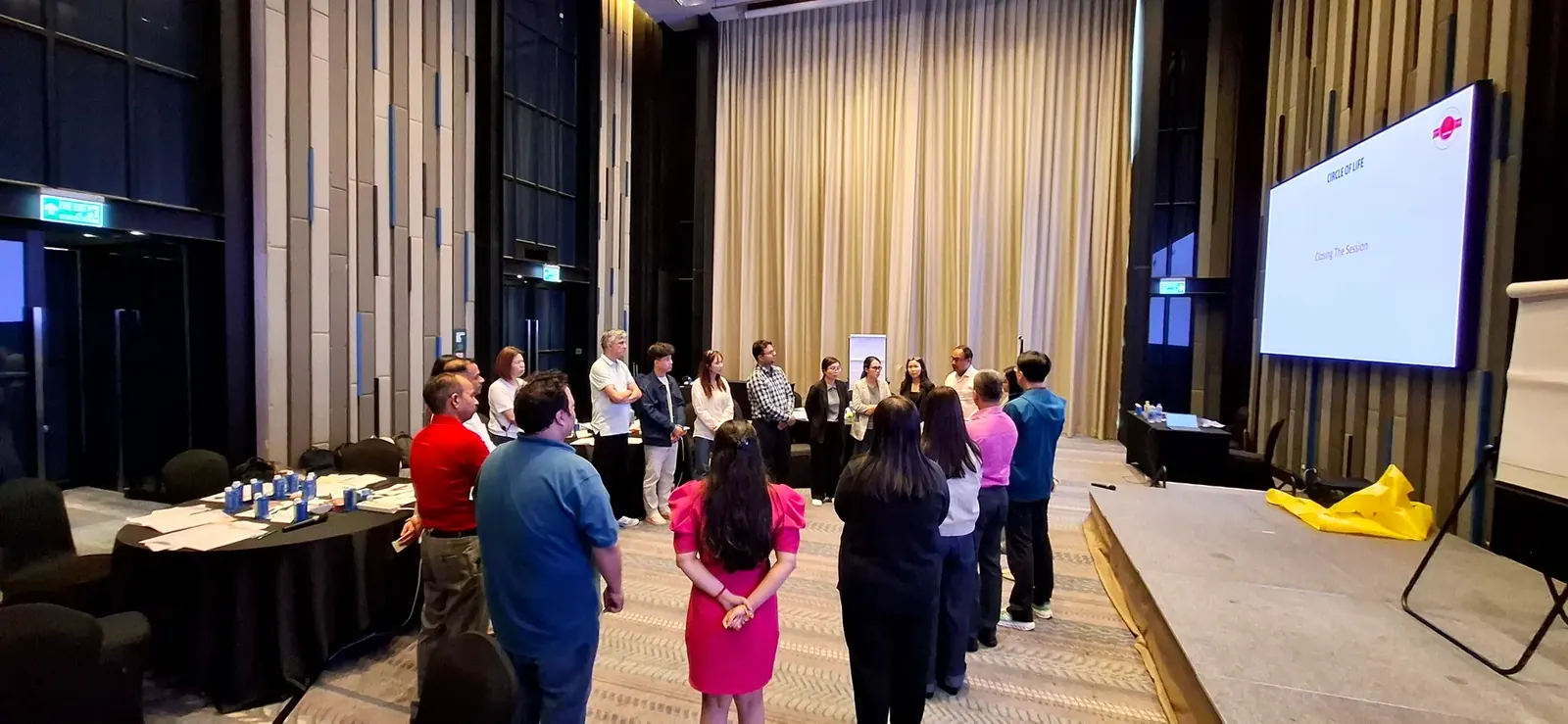
Then the core of the first time manager program: the transition itself, the three habits, and practice on real situations from the cohort’s own teams. Face to face, with a cohort of eighteen to twenty-four, so nobody hides.
Month one: delegation. Month two: expectations and feedback. Month three: the one-to-one rhythm. Each has a short assignment on the manager’s own team, and then a facilitated check-in.
The reporting manager is briefed before the workshop. Then they see the monthly assignment, and finally they endorse the proof of capability.
Managers at the same stage, although often from different functions. Therefore the check-ins become a place to compare notes, not just report progress.
A short, structured proof that each habit is in use, endorsed by the reporting manager. Alongside it, the team rates the manager at the start and at month three.
Three months, from baseline to proof
Baseline
Cohort confirmed with HR. Then DISC profiles are completed and debriefed. Reporting managers briefed on what the program will ask of them.
Two-day workshop
First the transition from doing to leading, and then the three habits, practised on real cases from the room. Finally, each manager leaves with a plan for month one.
Apply, month by month
Delegation first, then expectations and feedback, and finally the one-to-one rhythm. Each month has an assignment on the real team and a check-in. Meanwhile, the reporting manager sees progress.
Proof & readout
The proof of capability is completed and endorsed by the reporting manager. Finally, the team rating is repeated, and HR gets a cohort readout. Managers ready for more move towards the next level in time.
What changes for the business, the new manager, their team — and HR
The first-line manager is the biggest lever on engagement an organisation has. Therefore developing them properly is felt in every seat.
The strongest contributor stops being the bottleneck, because the job has changed. Instead, the work gets distributed, expectations get set, and problems surface in one-to-ones rather than in escalations. Productivity holds through the transition.
Watch: team output after promotion, escalationsMost new managers are never told what the job actually is. However, this one is different. This program tells them, and then makes them practise it for three months. As a result, the proof of capability is theirs, endorsed by their own boss.
Watch: proof of capability, self-confidence readDirect reports feel it first, because real work is handed over, clear expectations, regular one-to-ones that help. Engagement rises for the simplest reason. The person managing them learned how.
Watch: direct-report engagement, attrition under new managersInstead of a feedback form, HR gets a cohort readout: who holds the habits, who needs more, and which teams rate their manager differently now. Moreover, the reporting managers are part of the result, not bystanders to it.
Watch: cohort readout, reporting-manager endorsementsWhat this work has delivered for clients
First time manager training is accountable to the team’s second rating and the reporting manager’s endorsement. Until the first measured cohort case is published, however, here is the scale of the new-manager work already on the record.
Evidence standard: delivered at scale. Business figures are the client’s own; our work ran alongside them, and we say so. The full write-ups, with situation, what we did and why it worked, are on the case studies page.
Where we work: a first-time manager programme Mumbai companies run across business units, and new managers training Mumbai head offices schedule by the cohort. Similarly, a new manager course Bengaluru and new manager training Hyderabad technology firms fit between release cycles. A first time manager program Delhi NCR and first-time manager training Pune manufacturers take to plant supervisors, while a first level leadership program runs wherever the cohort sits. In short: first time manager training India-wide, a first time managers program that proves the habit, and manager training for new managers India’s CHROs can measure. first time manager training is designed on site, so it runs where the teams are.
At a glance
Enquire about this service
Tell us how many new managers you have, and how long they have been in role — a senior practitioner replies within one working day. No sales sequence, no juniors.
We use these details only to respond to your enquiry. We don't share them or add you to a mailing list. See our Privacy Policy.
First time manager training, asked the way buyers ask it
Who is the first time manager program for?
Managers within their first 24 months in role, with at least two direct reports. Typically, they were promoted from the team they now lead. The program is not for managers of managers; our Mid-Level Leadership Accelerator serves that layer instead.
Why three months, and not just the two-day workshop?
Because the workshop teaches the habits, but only the next three months prove them. Each month applies one habit on the manager's own team, with a check-in. As a result, the reporting manager can endorse something they actually saw, rather than a certificate of attendance.
What are the three application areas, and why those?
Delegation, expectations and feedback, and the one-to-one rhythm. Those three habits are where new managers fail most often, and they are also where direct reports feel the difference first. Everything else in management builds on them, so the program builds nothing else until they hold.
What does the reporting manager have to do?
Three things. They attend a short briefing before the workshop, they look at one assignment a month, and finally they endorse the proof of capability. It takes about two hours across the three months. However, it is the single strongest reason the habits stick.
Can you run this for thirty or forty new managers a year?
Yes, because a cohort of eighteen to twenty-four runs about every quarter. So thirty to forty managers a year means two cohorts. Larger organisations run a standing calendar, and new managers join the next cohort within a few months of promotion. The design is the same in every city we work in.
How is the first time manager program priced?
Fixed-fee per cohort, quoted after a short design conversation. The fee covers the DISC profiles and debriefs, the two-day workshop, the three monthly check-ins, the reporting-manager briefings and the proof of capability. Venue and travel pass through at cost.
Ready to make your new managers actual managers?
Start with a design conversation. After all, that is how first time manager training should begin: how many managers, how long in role, and what their teams will need to see in three months.