
Culture change management that moves the numbers, not the posters
Most culture programmes in India end with a values wall and a launch video. Ours ends with a re-measurement. We run a staged culture change management program: diagnose the current and ideal culture, design the target, embed the behaviours through leaders, and measure again to prove the shift happened.
19+ years · 600+ organisations · 23 sectors · Mumbai, Bengaluru, Delhi NCR and the GCC
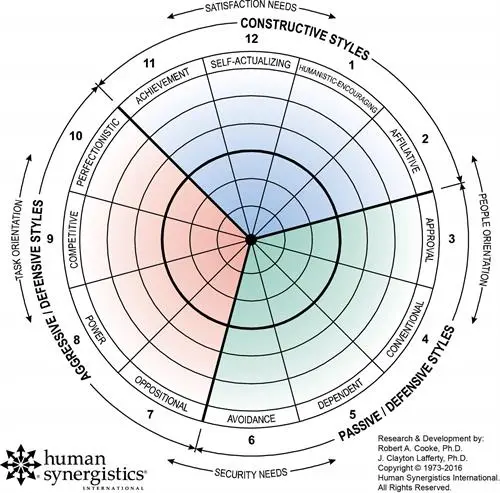
What is culture change management?
Culture change management is the deliberate, staged work of moving an organisation from the culture it has to the culture its strategy needs — measured first, designed on evidence, embedded through the daily behaviour of leaders and managers, and measured again at the end.
Culture is not what the values poster says; it is the behaviour that gets rewarded, tolerated and copied. Harvard Business Review’s Leader’s Guide to Corporate Culture makes the point that culture can be managed like any other lever once it is diagnosed and named — which is why our culture change process starts with an instrument, not a workshop. We diagnose with the OCI and OEI, published by Human Synergistics, and we treat behaviour change at scale as a leadership discipline rather than a communications campaign.
The current culture and the ideal culture are measured before a single intervention is chosen — the gap sets the scope.
Every value is translated into three to five observable behaviours per level, so a values to behaviours program can actually be coached and rated.
Culture moves at the speed of the senior team’s own behaviour. The programme works on that first, and the rest of the organisation second.
Three situations that bring organisations to this service
Two cultures under one logo, or a founder’s culture that no longer fits a 3,000-person company. Everyone can feel it; nobody can name it — so nothing is being managed.
The values were launched three years ago with posters, screensavers and an anthem. Engagement scores did not move, attrition did not move, and the leadership team privately calls the exercise a branding project.
A new strategy needs speed, accountability and candour; the operating culture rewards deference, consensus and silence. Every initiative stalls at the same layer, for the same reason.
How culture works, and where each Human Synergistics instrument measures it
Culture does not stand alone, because it sits between your ideal and the results you get. So the model links four things: the culture you want, the causal factors behind it, the culture people actually experience, and the outcomes it produces.
Swipe sideways to see the full model.
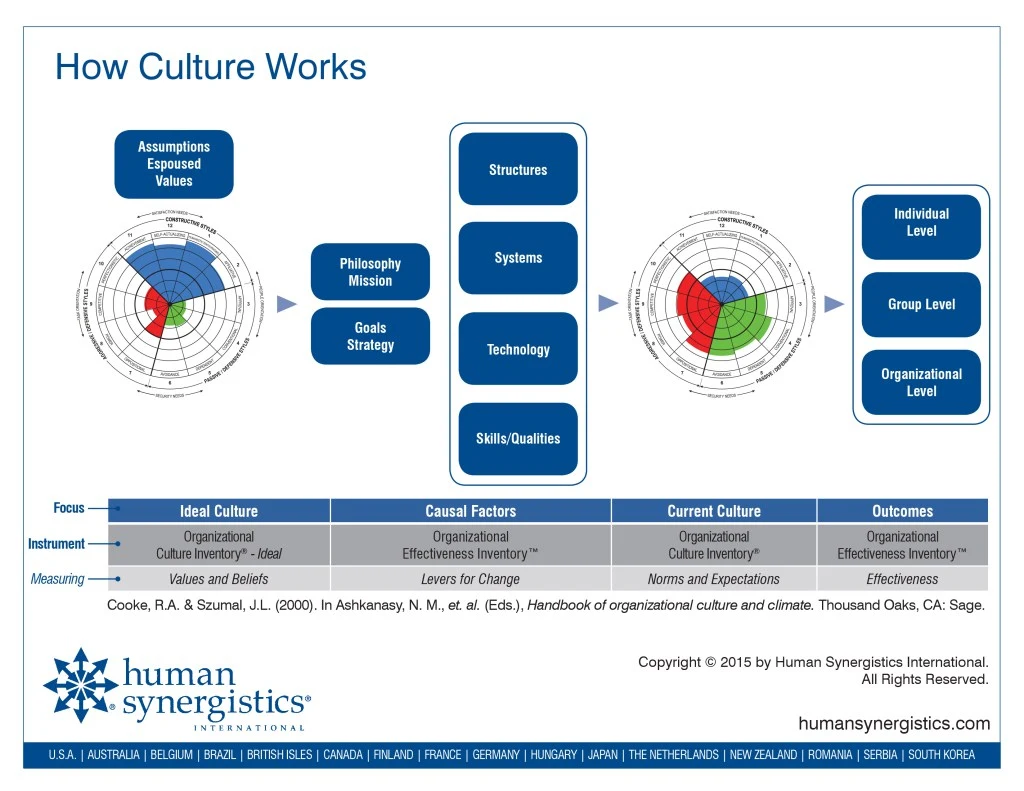
The OCI measures ideal and current culture, while the OEI measures the causal factors and the outcomes.
Culture by campaign versus culture by management
The difference is not sincerity — most campaigns are sincere. It is seven design decisions that a culture change roadmap for companies makes explicitly and a campaign never makes at all.
Every row is a decision made explicitly in the Design stage — the roadmap is written down, with owners and dates, before embedding begins.
Six deliverables, one managed journey
OCI and OEI across the organisation or a pilot unit, plus leadership interviews — the current culture, the ideal culture and the levers behind the gap, reported in plain language.
The three to five cultural shifts that strategy actually requires, each translated into observable behaviours by level: the values to behaviours program, on one page.
A staged culture change roadmap for companies: sequence, owners, milestones, the leadership rituals that change first and the HR systems that change next.
Working sessions with the top team on their own behaviour — the part of culture change management most organisations skip and most programmes die on.
Every people manager equipped to coach the target behaviours, supported by a champion network that keeps the journey visible between milestones.
Hiring, onboarding, appraisal and recognition criteria aligned to the target culture, and the same instrument run again at the end — the shift, measured.
From diagnostic to re-measurement in four stages
Diagnose
OCI and OEI administered, leadership interviews run, the gap between current and ideal culture quantified — the evidence base every later decision rests on.
Design the target
The senior team chooses the cultural shifts strategy needs, agrees the behaviours that define them, and signs off a culture change roadmap with owners and dates.
Embed through leaders
Senior-team sessions, manager enablement, rituals and decision rules go live wave by wave; champions keep the culture journey design visible between milestones.
Align systems & re-measure
People systems rewired to the target behaviours; the diagnostic run again; the shift reported honestly — and the next phase scoped from the new reading.
What changes for the business, the leaders, the managers — and the people who work there
Culture is the operating system everything else runs on. Manage it deliberately and every seat feels the difference — this is what organisational culture change India-wide looks like when it is run as management, not marketing.
Initiatives stop stalling at the same layer for the same reason. Speed, accountability and candour become the default rather than the exception, and the re-measurement shows the board a shift it can see in the numbers.
Watch: constructive-style percentile, initiative completion rateThe senior team stops sponsoring culture change and starts doing it: the rituals they run, the decisions they make visible, the behaviours they reward. The programme gives them the data and the room to do that honestly.
Watch: leadership 360 shifts, decision latencyManagers get three to five observable behaviours per value instead of five abstract nouns, plus the enablement to coach them. Culture becomes part of how they manage, not an HR event beside it.
Watch: manager-coaching frequency, team-level culture readsThe gap between what the company says and what it rewards is the single biggest driver of cynicism. Close it, and engagement, retention and discretionary effort move for the least glamorous reason: people believe what they see.
Watch: engagement, regrettable attrition, internal referralsWhat this work has delivered for clients
Culture change management is accountable to the second reading on the same instrument. Until the first measured case is published, here is the scale of the culture work already on the record.
Evidence standard: delivered at scale. Business figures are the client’s own; our work ran alongside them, and we say so. The full write-ups, with situation, what we did and why it worked, are on the case studies page.
Where we work: culture change programme India-wide for groups with several business units, culture journey design for leadership teams in Mumbai and Delhi NCR, culture change Mumbai and culture change Delhi NCR head offices can govern across regions, culture embedding Bengaluru and Hyderabad capability centres can run alongside a global parent, and a culture change programme Pune and Chennai manufacturers can take to the shop floor. Organisational culture change India can measure is designed on site; culture change management India-wide runs wherever your leaders are.
At a glance
Enquire about this service
Tell us where the stated culture and the lived one part company — a senior practitioner replies within one working day. No sales sequence, no juniors.
We use these details only to respond to your enquiry. We don't share them or add you to a mailing list. See our Privacy Policy.
Culture change management, asked the way buyers ask it
How long does a culture change programme take, realistically?
Nine to eighteen months for a measurable shift, staged. Diagnosis and design take about a quarter; embedding through leaders takes two to three; systems alignment and re-measurement close the first cycle. Anyone promising a culture change in a quarter is describing a launch, not a change.
Do we need the OCI, or can you work from our engagement survey?
Engagement surveys measure how people feel; the OCI measures how people are expected to behave — the operating culture itself. We need the second to design a culture change process, and we need it twice to prove the shift. Your engagement data is useful context, and we read it alongside the diagnostic.
Our values are already defined. Do we have to start again?
Rarely. Most values sets are fine as words; what is missing is the translation into observable behaviours by level and the systems that reward them. The values to behaviours program works from the values you have — it is the behaviours, the rituals and the consequences that are new.
What does this ask of our leadership team?
More than sponsorship. The senior team's own behaviour is the first thing the programme works on, because culture moves at the speed of what the top team visibly does. Practically: a diagnostic debrief, a design workshop, and a working session each quarter on their own rituals and decisions.
Can you run this in a single business unit or function first?
Yes, and it is often the right call: a pilot unit with a willing leader, measured at both ends, gives the rest of the organisation evidence instead of exhortation. The culture change roadmap then scales wave by wave, with the pilot's re-measurement as the proof point.
How is the engagement priced?
Fixed-fee by stage. You commit to the diagnostic first; its report scopes the design and embedding stages honestly before the larger commitment exists. Instrument licences pass through transparently, and senior practitioners run every session.
Ready to manage the culture instead of describing it?
Start with the diagnostic — the way culture change management should begin. The gap between your current and ideal culture, in numbers, tells you whether this is the work you need and how big it really is.