How to Integrate AI-Powered Robotics Into Your Operations Without Disrupting Your Workforce
- June 9, 2026
- Posted by: info@seven.net.in
- Category: AI Certification
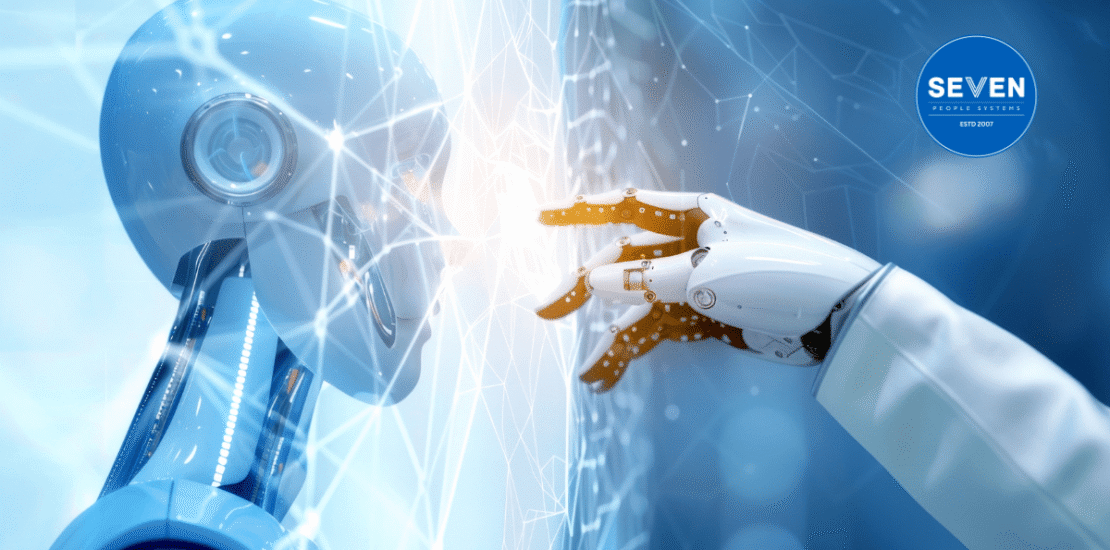
Operations directors, manufacturing leaders, and automation engineers across Mumbai, Pune, Bengaluru, Chennai, and Hyderabad face the same integration challenge. Robotics can transform their operations. However, poorly managed robotics adoption creates workforce anxiety, operational disruption, and failed implementations. Fortunately, AI robotics integration for operations in India is not simply about deploying machines. It combines intelligent automation with human capability to create faster, safer, and more productive operations. Meanwhile, AI workforce transformation with robotics in India upskills existing employees and creates new roles. Additionally, AI autonomous systems for business in India handles decisions and tasks that are too dangerous, too repetitive, or too data-intensive for human operators. Therefore, the AI Robotics certification in India from Seven People Systems gives professionals the deep learning, reinforcement learning, NLP, and autonomous systems knowledge to deploy AI-powered robotics with confidence.
Key Takeaways
- AI robotics integration for operations in India enhances efficiency by combining automation with human skills, enabling safer and faster operations.
- Manufacturers face rising labor costs, quality demands, and safety regulations, necessitating the adoption of AI robotics.
- Successful implementation relies on ensuring technology, process redesign, workforce upskilling, and governance are in place.
- AI manufacturing automation in India quickly delivers results in assembly, quality inspection, predictive maintenance, and logistics.
- The AI Robotics certification in India provides essential skills and knowledge for professionals to confidently lead robotics integration efforts.
Seven People Systems is India’s authorised AI CERTs® training partner — delivering globally recognised AI certifications to robotics, engineering, and operations professionals across every major Indian city.
Build the Future with Smart Automation
- Self-paced course + Official exam + Digital badge
Why Indian Organisations Are Accelerating AI Robotics Adoption
The global AI robotics market is growing from $17 billion in 2024 to over $64 billion by 2030. India’s manufacturing sector — concentrated in Pune’s automotive belt, Chennai’s electronics zone, Ahmedabad’s chemical industry, and Bengaluru’s technology parks — is a significant contributor to this growth.
Three pressures are driving AI robotics adoption across Indian operations. First, labour cost inflation in skilled manufacturing roles is making automation economics increasingly attractive. Second, quality requirements from global supply chain partners exceed what manual processes can reliably deliver. Third, safety regulations governing dangerous manufacturing environments are tightening — pushing organisations toward robotic handling of hazardous tasks.
Consequently, AI robotics integration for operations in India is no longer a long-term option for Indian manufacturers. It is an active competitive necessity. Organisations in Pune’s automotive sector, Chennai’s electronics industry, and Ahmedabad’s pharmaceutical manufacturing that deploy AI-powered robotics consistently improve their productivity, quality, and safety metrics. These advantages compound over time.
Furthermore, AI manufacturing automation in India is increasingly accessible to mid-size Indian manufacturers — not just large conglomerates. Cloud-based AI tools, lower-cost collaborative robots, and no-code integration platforms have dramatically reduced the barriers to entry.
Seven People Systems trains operations and robotics professionals across India to build the AI skills their organisations need to implement these systems effectively.
AI Robotics Integration — The Four Pillars of Successful Deployment
AI robotics integration for operations in India succeeds when built on four pillars — technology, process, workforce, and governance. Missing any one of them is the most common cause of implementation failure in Indian organisations.
Technology — Selecting the Right Robotics Solution
Not every robotics solution fits every operational context. AI robotics integration for operations in India begins with matching robotics technology to the specific task, environment, and performance need.
Collaborative robots — cobots — work alongside human operators in shared spaces. They are ideal for assembly tasks in Pune’s automotive plants and Chennai’s electronics lines where human dexterity and robot accuracy both add value. Industrial robots operate independently in separate zones — ideal for welding, painting, and heavy material handling in steel processing facilities in Jharkhand and Odisha. Autonomous mobile robots navigate warehouse and logistics environments — increasingly deployed in Bengaluru’s e-commerce centres and Mumbai’s pharmaceutical distribution operations.
AI manufacturing automation in India tools select the right robotics architecture by analysing task type, environment, accuracy needs, and human interaction. This analysis prevents the most expensive robotics mistake — deploying a complex autonomous system for a task that a simpler cobot handles more effectively.
Process — Redesigning Workflows Around Human-Robot Collaboration
Integrating a robot into an existing workflow without redesigning it consistently produces poor outcomes. The robot simply copies an inefficient human process rather than enabling a better one. Consequently, AI robotics integration for operations in India requires full process redesign. It maps every step in the current workflow and rebuilds it around human-robot task allocation.
A manufacturing operation in Pune that redesigned its assembly line around collaborative robots consistently achieves 35 to 45 percent productivity improvement. In contrast, operations that simply substitute robots for humans on existing configurations consistently achieve only 15 to 20 percent improvement — leaving significant value unrealised.
AI autonomous systems for business in India in process redesign identifies the human steps that increase in value when robots handle adjacent tasks. A quality inspector freed from manual inspection of 10,000 components per shift now focuses on exception handling, root cause analysis, and supplier quality management. Furthermore, this is higher-value work that was previously impossible to prioritise.
Workforce — Upskilling for Human-Robot Collaboration
AI workforce transformation with robotics in India addresses the most sensitive dimension of robotics adoption — the impact on the people whose roles change when robots arrive.
The fear is understandable. Notably, workers in Chennai’s electronics factories and Bengaluru’s manufacturing operations have watched automation affect roles in other industries. The challenge is the transition period — and managing it well requires deliberate workforce planning.
AI workforce transformation with robotics in India operates on three tracks. First, redeployment — mapping affected workers to new roles that robotics creates. Specifically, robot operators, programmers, quality supervisors, and maintenance technicians are all new roles that robotics generates. Furthermore, upskilling provides the training that enables current workers to fill these new roles. Third, communication — ensuring workers understand the plan, their place in it, and the support available throughout the transition.
Governance — Safety, Ethics, and Compliance
AI robotics integration for operations in India must operate within a governance framework covering safety, ethics, and compliance. Indian manufacturing regulations increasingly govern autonomous systems — particularly in dangerous environments. Every deployment must meet applicable safety standards, document its risk assessment, and maintain human override for every autonomous decision.
Furthermore, AI autonomous systems for business in India in customer-facing roles must meet specific ethical and regulatory standards. This applies to service robots in Mumbai, healthcare robots in Hyderabad, and logistics robots in Delhi.
Build the Future with Smart Automation
- Self-paced course + Official exam + Digital badge
AI Manufacturing Automation — Where Indian Operations See the Fastest Results
AI manufacturing automation in India delivers measurable results fastest in four operational categories. All four share high task volume, clear performance metrics, and room for initial adjustment.
Assembly and Production
AI-powered collaborative robots in assembly operations deliver 30 to 50 percent cycle time reduction for repetitive tasks. Pune’s automotive component manufacturers and Chennai’s electronics assembly operations have deployed cobots in screw driving, component placement, and sub-assembly tasks. They achieve quality consistency that manual assembly cannot sustain over full production shifts.
Quality Inspection
AI computer vision systems inspect components at speeds and accuracy levels that manual inspection cannot match. A machine vision system in a Bengaluru electronics plant inspects 15,000 circuit boards per shift against 47 quality criteria — achieving 99.7 percent defect detection accuracy. In contrast, manual inspection achieves 94 to 96 percent accuracy at one-fifth the throughput.
Predictive Maintenance
AI manufacturing automation in India through predictive maintenance monitors equipment health continuously. It identifies early signs of failure before they create production downtime. Manufacturers in Ahmedabad’s chemical sector and Pune’s automotive plants using AI predictive maintenance consistently reduce unplanned downtime by 25 to 40 percent. Consequently, production output improves without capital investment in additional equipment.
Logistics and Material Handling
Autonomous mobile robots handle material movement between production stations, assembly lines, and dispatch. Additionally, AI robotics integration for operations in India in logistics consistently reduces material handling labour costs by 40 to 60 percent. Delivery reliability within facilities improves at the same time.
The AI Robotics certification in India from Seven People Systems covers all of these capabilities. It includes deep learning, reinforcement learning, generative AI for robotics, NLP for human-robot interaction, autonomous systems design, and robotic process automation. Additionally, it covers AI ethics, safety, and a project-based capstone — through approximately 40 hours of on-demand content and interactive labs.
Explore the AI+ Robotics™ certification here.
How to Integrate AI Robotics Without Disrupting Your Workforce — Step-by-Step
- Conduct a Workforce and Process Audit
Map every role and every process that AI-powered robotics will affect. AI workforce transformation with robotics in India requires this map before any robotics deployment decision is made.
- Select Your Highest-Impact Use Case
Identify the operational area where AI robotics integration delivers the greatest productivity, quality, or safety improvement relative to the workforce disruption it creates. Start AI robotics integration for operations in India with this use case — not the most complex or the most visible one.
- Communicate Early and Transparently
Brief your workforce on the robotics adoption plan before any equipment arrives. Explain which roles will change, which new roles will be created, and what support is available for the transition. AI workforce transformation with robotics in India that communicates early consistently achieves faster adoption and lower resistance than programmes that announce robotics deployment after the fact.
- Redesign the Workflow
Not Just the Task Design the new human-robot workflow from first principles. AI manufacturing automation in India delivers its greatest value when the workflow is redesigned around human-robot collaboration — not when robots are simply substituted for humans in an existing manual workflow.
Build the Future with Smart Automation
- Self-paced course + Official exam + Digital badge
FAQ
Well-managed AI robotics integration for operations in India creates more roles than it eliminates — at higher skill levels. Manufacturing organisations in Pune, Chennai, and Ahmedabad that have implemented AI manufacturing automation in India consistently report that their total workforce remains stable or grows — with a shift in role composition toward robot operation, programming, quality supervision, and maintenance. The roles that disappear are typically those involving repetitive, physically demanding, or hazardous tasks.
AI robotics integration for operations in India is increasingly viable for Indian SMEs. Collaborative robot costs have fallen significantly. Cloud-based AI autonomous systems for business in India tools have reduced software investment requirements.
The AI Robotics certification in India covers AI and robotics fundamentals, deep learning algorithms for robotic perception, reinforcement learning for autonomous adaptation, generative AI for robotic creativity, NLP for human-robot interaction, autonomous systems and intelligent agents, robotic process automation, AI ethics and safety, and a project-based capstone. It includes approximately 40 hours of on-demand content, interactive labs, and assessments.
Final Thoughts
AI robotics integration for operations in India transforms manufacturing and operations — not by replacing human workers but by deploying intelligent automation where it adds the most value. Consequently, AI manufacturing automation in India delivers measurable improvements in productivity, quality, and safety across Pune, Chennai, Bengaluru, Ahmedabad, Hyderabad, and Mumbai. Furthermore, higher-skilled, higher-value roles are created through deliberate upskilling via AI workforce transformation with robotics in India. Moreover, the dangerous, the repetitive, and the data-intensive tasks are handled by AI autonomous systems for business in India — enabling human operators to focus on strategic and creative work. Therefore, the AI Robotics certification in India from Seven People Systems gives every operations and engineering professional the knowledge to lead this transformation.
Apply the six-step framework in this article to build your AI robotics integration programme. Then formalise your expertise with the AI+ Robotics™ certification from Seven People Systems — the AI CERTs® authorised training partner for robotics and operations professionals across India.
Visit Seven People Systems to explore the full range of AI certifications available for engineering, operations, and technology professionals across India.
Latest Blogs
- How to Drive Organizational Culture Change That Actually Sticks
- How to Ensure Your AI Systems Stay Compliant With Global Data Privacy Regulations
- How to Use AI in Finance Without Compromising Accuracy, Compliance, or Your Judgment
- How to Build AI-Powered Dashboards That Give Decision-Makers Real Answers, Not Just Data
- How to Use AI to Automate QA Testing and Catch Defects Before They Reach Customers