AI+ Ethics™ Navigate the Intersection of AI and Ethics in Business Landscape
Looking for a recognised credential that strengthens responsible AI adoption in India? AI+ Ethics™ is a practical pathway for professionals comparing the Best AI Certification for Ethics in India, because it builds job-relevant capability across ethical AI foundations starting with societal impact and progressing into bias mitigation, explainability, privacy, governance, and global standards.Moreover, if you are also evaluating the AI Certification For Ethics Professionals, this program fits well because it reinforces fairness, transparency, accountability, and privacy principles that organisations now expect in AI-led decision-making. In addition, the AI Ethics Certification in India helps you apply ethical frameworks to real business contexts, so you can guide safer AI deployment with clarity and confidence.As an Artificial Intelligence Certification For Ethics, it supports leaders who must assess ethical risk, align systems to policy, and improve trust across stakeholders. Therefore, if you want a Leading AI Certification Ethics pathway that goes deeper than surface-level guidance, AI+ Ethics™ gives you a structured, role-relevant route into ethical AI practice.
What you will get
High-Quality Videos, E-book (PDF & Audio), and Podcasts
AI Mentor for Personalized Guidance
Quizzes, Assessments, and Course Resources
Online Proctored Exam with One Free Retake
Comprehensive Exam Study Guide


Why AI Ethics™? 10X AI Governance & Compliance Impact
- Deep Ethical Insight
Understand the societal and ethical implications of AI to support responsible decision-making. - Bias and Fairness
Learn to detect and reduce bias in AI systems while promoting transparency and equity. - Privacy and Security
Explore methods to protect data and ensure the security of AI systems. - Global Compliance
Gain knowledge of international AI laws and regulations to align with ethical and legal standards.
Who Should Enroll
- Ethics Professionals
Advance your understanding of AI ethics to support responsible and transparent technology use. - AI and Data Enthusiasts
Apply ethical frameworks to real-world AI decision-making and development. - Compliance Officers
Ensure AI solutions align with regulatory standards and reduce organizational risk. - Technology Leaders
Lead responsible AI adoption and build trust through ethical innovation. - Students and New Graduates
Develop future-ready skills in AI ethics to stand out in an evolving tech landscape.
- AI4People (Atomium - European Institute for Science, Media, and Democracy)
- IBM - AI Fairness 360
- IBM - AI Explainability 360
- European Commission High-Level Expert Group on AI
Prerequisites
Basic understanding of AI and machine learning concepts
Awareness of AI’s social, cultural, and political implications
Familiarity with professional ethics and responsible decision-making
Exposure to real-world ethical dilemmas in AI through case studies
Ability to critically assess AI systems from an ethical perspective
Understanding of laws, regulations, and industry standards related to AI
Exam Blueprint:
- Overview of AI Ethics & Societal Impact – 10%
- Bias and Fairness in AI – 5%
- Transparency and Explainable AI – 10%
- Privacy and Security Issues in AI – 5%
- Accountability and Responsibility – 10%
- Legal and Regulatory Issues – 15%
- Ethical Decision-Making Frameworks – 15%
- AI Governance & Best Practices – 15%
- Global AI Ethics Standards – 15%
Frequently Asked Questions
Why is there a growing demand for ethics professionals in AI
As AI technologies become more integrated into decision-making, organizations need professionals who can ensure fairness, transparency, and responsible use to mitigate ethical and legal risks.
Who should take the AI+ Ethics Certification
This certification is ideal for ethics professionals, compliance officers, technology leaders, AI practitioners, and anyone seeking to integrate ethical practices into AI development and deployment.
How will this certification benefit my career
You will gain in-demand skills to assess AI systems ethically, guide responsible implementation, and position yourself as a trusted expert in a growing field.
How does the AI+ Ethics Certification help in career advancement
It opens doors to roles focused on AI governance, risk management, compliance, and innovation leadership, making you a valuable asset in AI-driven organizations.
How can organizations benefit from having employees with AI+ Ethics Certification
Certified professionals help build trust, ensure regulatory compliance, and lead ethical AI strategies that protect the organization and its stakeholders.
How long does the certification process take
The course is self-paced and typically takes 6 to 8 hours to complete, including interactive modules, case studies, and the final assessment.
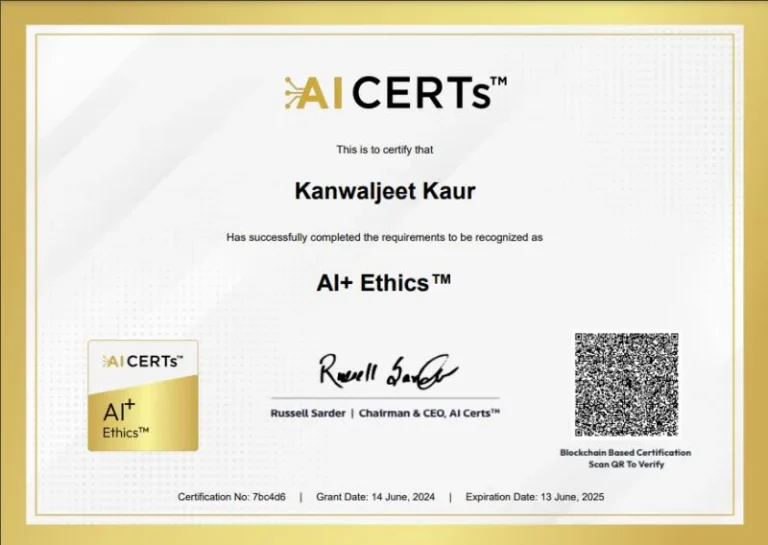
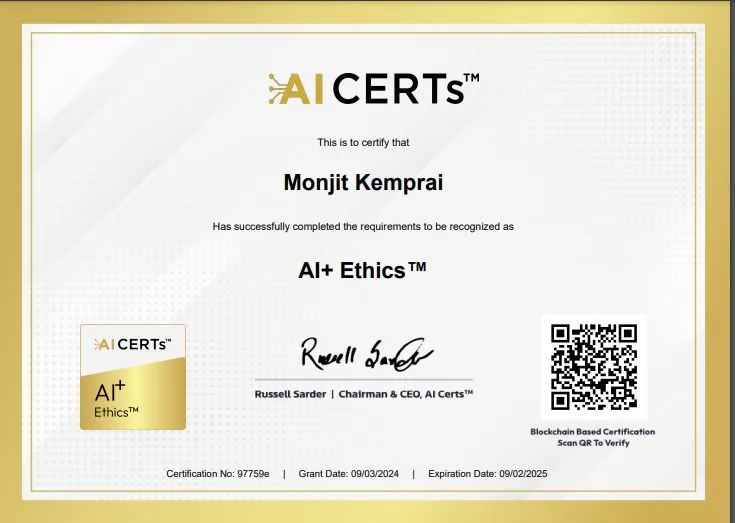
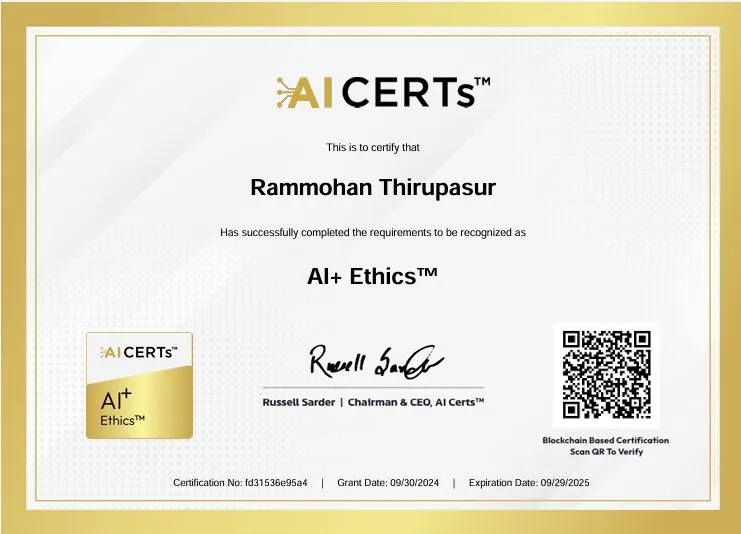
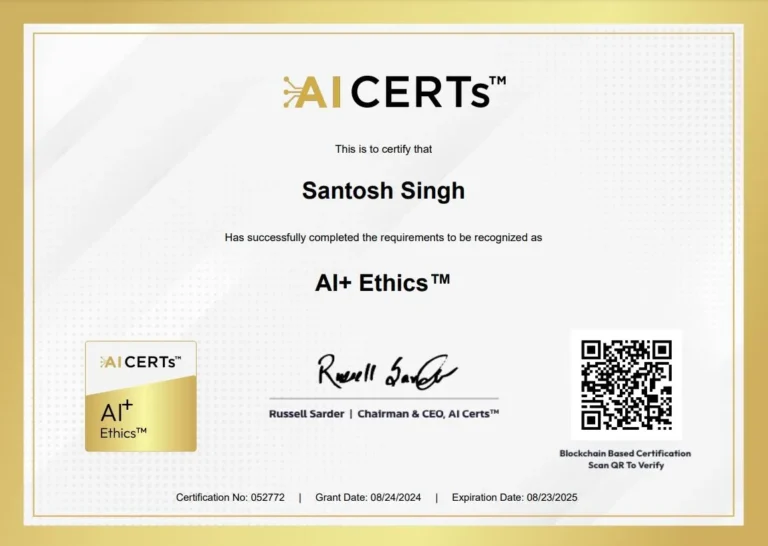
Trusted LinkedIn Reviews Posted by Our Learners
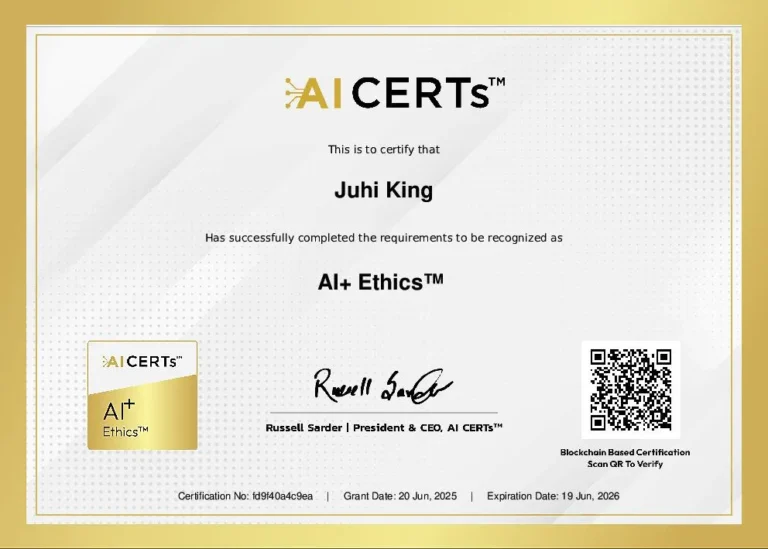
AI+ Ethics™ All you need to know about this course
AI+ Ethics™ is a practical, beginner-friendly certification course that teaches you how to evaluate and guide AI systems using clear ethical principles and industry-aligned frameworks. It covers societal impact assessment, bias and fairness strategies, explainability methods, privacy and security safeguards, accountability models, legal and regulatory considerations, governance best practices, and global ethics standards.
Because the program stays grounded in real-world business challenges, it also helps you translate ethics into implementable controls—so you can apply ethical AI with confidence and earn a recognised credential.
What is AI+ Ethics™ Certification?
AI+ Ethics™ is an entry-to-intermediate certification that builds a practical, job-ready foundation in ethical AI—the discipline of aligning AI development and deployment with fairness, accountability, transparency, privacy, and societal well-being. It goes beyond introductory ethics by addressing complex dilemmas, impact assessments, and governance risks, while also covering global frameworks and regulatory intersections such as GDPR and the EU AI Act.
As a result, the Best AI Certification for Ethics in India helps business and technology stakeholders evaluate AI responsibly, reduce risk, and improve trust through clear ethical guidelines.
What you will be able to do after the program
-
Explain core ethical principles in AI, including fairness, accountability, transparency, and privacy.
-
Identify bias sources in data and models, and apply practical mitigation strategies.
-
Improve explainability by selecting suitable transparency approaches for stakeholders and auditors.
-
Apply privacy and security safeguards, including responsible data handling and compliance alignment.
-
Use governance and global ethics standards to guide ethical AI adoption across teams and business units.
Who should enroll in AI+ Ethics™?
This AI Certification For Ethics Professionals is ideal for learners in India who want a structured, industry-aligned path to evaluate and guide AI responsibly—without needing deep technical expertise.
Recommended for
-
Business managers responsible for strategy and ethical AI decisions
-
CXOs and senior leaders shaping AI governance and risk posture
-
Frontline teams working with AI systems who need ethics awareness and controls
-
Compliance, risk, audit, and policy stakeholders managing AI-related obligations
-
Product, data, and operational leaders implementing ethical safeguards in workflows
Prerequisites
-
Basic understanding of AI concepts and common business use cases (no technical expertise required)
-
Awareness of ethical principles and the societal impact of technology
-
Curiosity and willingness to explore bias, privacy, and mitigation strategies
Skills you will gain (AI+ Ethics™)
By the end of this AI Ethics Certification in India, you will have repeatable skills for evaluating ethical AI risks and guiding responsible adoption—faster and more reliably.
Core ethical AI skills
-
Ethical guideline creation for AI initiatives (principles, boundaries, and stakeholder expectations)
-
Bias detection and mitigation planning across data, modelling, and decision processes
-
Explainability selection for audits, users, and regulators (clear decision rationale)
-
Privacy and security risk identification plus safeguards (access control, encryption, monitoring)
-
Accountability mapping across teams (ownership, documentation, review cadence)
Framework fluency
-
Working knowledge of global standards and governance patterns
-
Introductory capability to evaluate regulatory touchpoints, including GDPR and EU AI Act context
Responsible and business-safe AI use
-
Risk-aware adoption planning that balances innovation with societal impact
-
Monitoring and impact assessment habits to prevent drift and ethical regressions
-
Stakeholder engagement practices that strengthen transparency and trust
What does the AI+ Ethics™ course cover?
Module 1: AI Ethics Overview & Social Impact
-
Ethical and social implications of AI across labour markets, economies, and daily life
-
Ethical challenges such as bias, fairness, privacy, and the need for transparency
-
Impact assessment approaches and high-level global frameworks
Module 2: Bias and Fairness
-
Origins and impacts of bias in data and algorithms
-
Detection and management strategies, including audits and fairness-aware techniques
-
Ethical and regulatory considerations linked to equitable outcomes
Module 3: Explainability and Clarity
-
Why explainable AI matters for accountability and trust
-
Interpretable communication of AI decisions for users, auditors, and leaders
-
Practical methods to make decision-making understandable and reviewable
Module 4: Privacy and Security
-
Privacy and security risks in sensitive domains such as healthcare and banking
-
Controls such as encryption, access restrictions, and real-time threat detection
-
Responsible data handling and transparent AI operations aligned to compliance needs
Module 5: Accountability and Ownership
-
Documentation, transparency, and governance practices that support responsible AI
-
Practitioner responsibilities: secure handling, monitoring, and stakeholder engagement
-
Continuous improvement expectations for ethical AI systems
Module 6: Law and Regulation
-
Global regulation landscape and cross-border compliance considerations
-
Privacy, ethical practice, and intellectual property implications
-
Regulatory awareness for responsible AI deployment
Module 7: Ethical Decision Frameworks
-
Industry-aligned ethical design principles and enterprise AI ethics policies
-
Case-driven learning and simulations to test ethics in practice
-
Balancing innovation with ethical responsibility in real deployments
Module 8: Governance and Best Practices
-
Governance patterns that prioritise transparency, accountability, and inclusivity
-
Practical application of compliance-aligned operational thinking
-
Governance as an enabler of trust and sustainable AI adoption
Module 9: Global Standards
-
Regional differences in privacy, innovation, and state control approaches
-
Standards and tools that support ethical evaluation
-
Building globally compatible AI ethics programs for scale
Learning outcomes by role
Business Leadership and CXOs
-
Define ethical AI priorities, guardrails, and governance ownership
-
Set approval workflows for high-impact AI use cases
-
Improve stakeholder trust through transparency and accountability standards
Managers and Operations Teams
-
Turn ethical requirements into repeatable processes and SOPs
-
Build escalation paths for AI-related risk and incidents
-
Monitor ethical drift and operationalize continuous improvement
Compliance, Risk, and Legal Stakeholders
-
Align AI deployments with privacy, governance, and oversight expectations
-
Strengthen documentation and audit readiness across AI workflows
-
Evaluate vendor tools and internal models through a risk-and-controls lens
Frontline Users of AI Systems
-
Recognize bias, privacy, and misuse risks during day-to-day AI usage
-
Apply safe prompting and responsible handling of sensitive information
-
Escalate issues with clear evidence and structured reporting
Real projects you’ll do
These practical projects help you demonstrate applied outcomes while strengthening your ethical AI capability in real settings.
Ethical AI Policy Starter Kit
Build a reusable policy set that includes:
-
Ethical principles and risk tiers for AI use cases
-
Review workflow (approve → monitor → reassess)
-
Documentation checklist for transparency and accountability
-
Stakeholder roles and escalation criteria
Bias Review Playbook
Create a repeatable bias evaluation workflow that:
-
Identifies bias risks in datasets and decision outcomes
-
Defines fairness checks and audit cadence
-
Documents mitigation actions and residual risk
Explainability Pack
Design an explainability approach that produces:
-
Stakeholder-ready explanations (leaders, users, auditors)
-
Model documentation and decision rationale notes
-
Practical guidance for challenging or appealing outcomes
Why learn AI ethics for business in India?
AI ethics is becoming a core workplace capability because it directly shapes trust, compliance readiness, and long-term sustainability. As Indian organizations scale AI adoption, they need professionals who can guide responsible use—especially where AI affects people, access, safety, and fairness.
In India, ethical AI capability helps teams:
-
Reduce biased outcomes in hiring, lending, and customer decision flows
-
Protect privacy and sensitive data in AI-supported operations
-
Improve transparency for leadership, customers, and regulators
-
Strengthen governance so AI systems stay accountable over time
Certification value and career outcomes
AI+ Ethics™ is valuable because it transforms “ethical awareness” into structured, repeatable practice that teams can implement across workflows.
Why employers value this certification
-
Signals you can evaluate ethical risk with practical methods and frameworks
-
Demonstrates you can build governance habits, not one-off opinions
-
Confirms you understand privacy, transparency, fairness, and accountability as operational requirements
-
Shows readiness to guide responsible AI adoption across stakeholders
Career outcomes (what it helps you do next)
-
Contribute to AI governance, risk, compliance, and responsible AI initiatives
-
Support ethical design reviews and deployment readiness assessments
-
Build practical artifacts: risk reviews, bias mitigation plans, transparency briefs
-
Strengthen leadership credibility in AI policy, oversight, and stakeholder communication
Practical ROI for learners in India
-
Make better decisions faster with structured ethical frameworks
-
Reduce rework by identifying risk early in the lifecycle
-
Improve stakeholder trust with clearer accountability and transparency practices
-
Create reusable governance assets that scale across teams
Ethical AI checklist
9-step ethical AI checklist
-
Define the purpose and intended outcomes
-
Identify stakeholders and impacted groups
-
Assess bias risks and fairness requirements
-
Check privacy and data handling obligations
-
Specify transparency and explainability needs
-
Assign accountability and escalation ownership
-
Validate controls through review and testing
-
Monitor outcomes and ethical drift post-launch
-
Document decisions and update governance practices
Tools and methods you’ll work with
AI+ Ethics™ introduces the frameworks and decision tools used to guide responsible AI—so you can choose practical controls for the right risk level.
You’ll build working familiarity with:
-
Ethical impact assessment methods
-
Bias detection and mitigation approaches
-
Explainability and transparency techniques
-
Governance frameworks and best-practice policy structures
-
Global standards and regulatory-aligned thinking
Use cases by industry
Healthcare
-
Privacy-conscious handling of sensitive data
-
Responsible decision support with explainability expectations
-
Governance workflows for high-impact AI use
Banking and Financial Services
-
Fairness controls for credit and eligibility flows
-
Strong monitoring for bias drift and compliance readiness
-
Transparent customer communication around AI-supported decisions
Transportation and Public Systems
-
Accountability structures for safety-relevant AI
-
Risk assessment for societal and operational impact
-
Clear documentation and stakeholder communication
Enterprise Operations
-
Ethical guardrails for AI copilots and automation
-
Policy-aligned AI usage standards for teams
-
Incident reporting and continuous improvement loops
Certification & Exam Overview
-
Level: Role-based professional certification
-
Learning mode: Self-paced
-
What you learn: AI ethics foundations + societal impact assessment + bias and fairness + transparency and explainability + privacy and security + accountability + legal and regulatory considerations + ethical decision-making frameworks + AI governance + global ethics standards
-
Assessment/exam: Online, aligned to certification objectives and ethics-focused outcomes
-
Delivered in India by: Seven People Systems Pvt. Ltd.
Why Seven People Systems Pvt. Ltd.
Choosing the right training partner matters because ethical AI outcomes depend on repeatable governance habits, clear standards, and assessment-ready competence—not just passive content consumption.
Why learners in India choose Seven People Systems Pvt. Ltd.
-
Authorized partner delivery aligned to certification standards so your learning stays mapped to the credential requirements.
-
Clear progression from principles to governance practice, including impact assessment, bias controls, transparency routines, and accountability setup.
-
Practical ethics playbooks you can apply immediately, such as review checklists, documentation patterns, and stakeholder communication formats.
-
Structured assessments and guided resources that strengthen retention and improve exam readiness.
-
Professional-friendly delivery for individuals and teams, so learners can practice real scenarios and build confidence quickly.
AI+ Ethics™ Navigate the Intersection of AI and Ethics in Business Landscape