How to Use AI to Predict Supply Chain Disruptions Before They Cost You Money
- May 14, 2026
- Posted by: info@seven.net.in
- Category: AI Certification
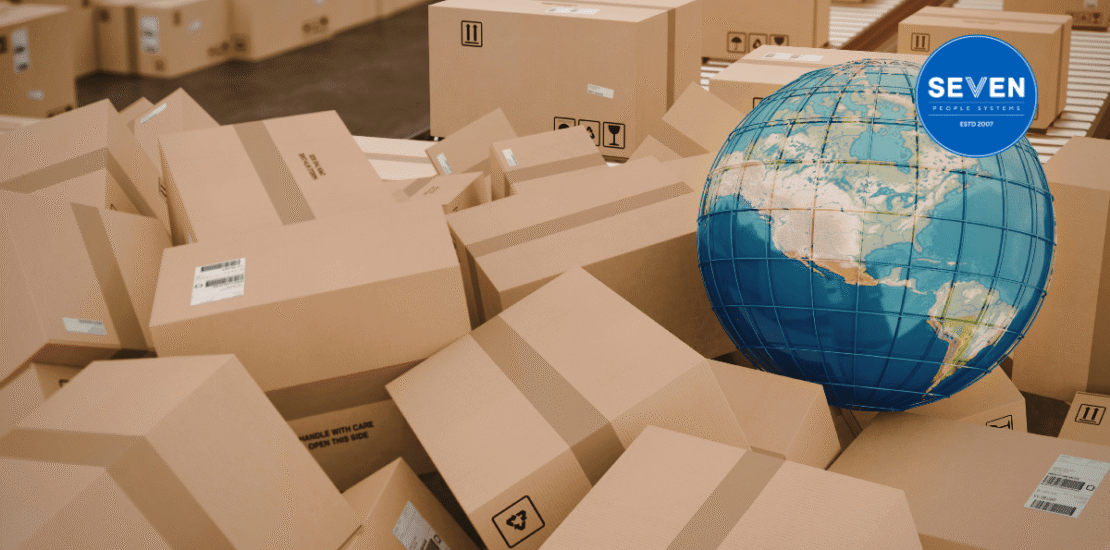
Supply chain leaders across Mumbai, Pune, Delhi, Chennai, and Bengaluru know this experience well. A disruption arrives without warning. Raw materials get delayed. A key supplier goes silent. Then a port congestion event cascades into a full production halt. The financial damage hits immediately — and it is entirely avoidable. Fortunately, AI supply chain disruption prediction in India now gives operations teams the ability to see these problems coming days or weeks ahead. Moreover, AI demand forecasting in India removes the guesswork that causes overstocking and stockouts at the same time. Additionally, AI logistics optimisation in India keeps goods moving through the best routes even when conditions shift.
Key Takeaways
- Supply chain leaders in India face disruptions due to complexity, unpredictable events, and outdated manual monitoring.
- AI supply chain disruption prediction empowers teams to foresee issues, offering significant lead time for proactive solutions.
- AI demand forecasting eliminates overstocking and stockouts by analyzing multiple demand signals simultaneously.
- AI logistics optimization enhances efficiency through smarter routing and carrier selection, resulting in cost savings.
- Building an AI-ready supply chain requires robust data infrastructure and skilled professionals to interpret and act on predictions.
Transforming Supply Chain Management
Self-paced course + Official exam + Digital badge
Why Indian Supply Chains Are Particularly Vulnerable to Disruption
India’s supply chains are among the most complex in the world.
Several factors compound this complexity. Monsoon seasons disrupt road freight across Maharashtra, Gujarat, and Odisha every year. Port congestion at JNPT in Mumbai and Chennai Port remains a recurring challenge. Geopolitical events affect import-dependent supply chains across India’s pharmaceutical, electronics, and automotive sectors. Furthermore, demand patterns across India’s diverse consumer markets are harder to predict than in more homogeneous economies — what sells in Bengaluru behaves differently from what sells in Patna.
Consequently, Indian businesses that rely on manual supply chain monitoring and reactive decision-making consistently absorb avoidable costs. AI supply chain disruption prediction in India changes this. It shifts the operating model from reactive to predictive — and the financial impact of that shift is substantial.
How AI Predicts Supply Chain Disruptions — the Mechanism
AI disruption prediction works by monitoring a far wider range of signals than any human team can track simultaneously. It analyses supplier performance data, port congestion reports, weather forecasts, geopolitical news feeds, commodity price movements, and historical disruption patterns — all at once, in real time.
When these signals combine in patterns that historically precede disruptions, the AI flags the risk before the disruption occurs. A supply chain manager at an automotive components firm in Pune receives an alert seven days before a key supplier in Gujarat is likely to face a logistics delay — based on a combination of weather forecasts, that supplier’s recent on-time delivery trends, and regional freight capacity data.
This advance warning is what makes AI supply chain disruption prediction in India genuinely valuable. Seven days of lead time allows the operations team to activate an alternative supplier, pre-order buffer stock, or adjust production schedules. Without the prediction, the team discovers the problem on the day it happens — and scrambles to recover at significant cost
AI Demand Forecasting in India — Eliminating the Overstocking and Stockout Trap
Every Indian supply chain manager understands the frustration of this paradox. Too much stock in the warehouse means working capital is tied up in slow-moving inventory. Too little means stockouts that cost sales and customer trust. Traditional demand forecasting — based on historical averages and seasonal adjustments — cannot resolve this paradox reliably in India’s dynamic, diverse market.
AI demand forecasting in India resolves it. AI models analyse dozens of demand signals simultaneously — past sales data, real-time point-of-sale data, search trend data, social media sentiment, weather patterns, festival calendars, and competitive pricing movements. They produce demand predictions at the SKU level, by location, updated continuously as new data arrives.
A FMCG distributor in Hyderabad using AI demand forecasting can predict which products will spike in demand across specific pin codes during Diwali — two weeks in advance. They adjust procurement and warehouse positioning accordingly. Stock arrives where it is needed, when it is needed. The stockout rate drops. Excess inventory costs fall.
Furthermore, AI demand forecasting in India improves continuously. Each prediction cycle generates new outcome data that feeds back into the model. The longer an Indian business runs AI demand forecasting, the more accurate its predictions become.
Transforming Supply Chain Management
Self-paced course + Official exam + Digital badge
AI Logistics Optimisation in India — Moving Goods Faster and Cheaper
India’s logistics landscape is improving rapidly. But it remains complex. Multiple transport modes, variable road conditions, toll infrastructure differences across states, and last-mile challenges in Tier 2 and Tier 3 cities all create optimisation opportunities that manual planning cannot fully capture.
AI logistics optimisation in India addresses these challenges across three dimensions.
Route Optimisation
AI route planning tools analyse real-time traffic data, road condition reports, toll costs, vehicle capacity, and delivery windows. They generate the most efficient route for each delivery — not the most familiar one. Logistics operators in Delhi, Bengaluru, and Mumbai using AI route optimisation consistently report fuel cost reductions of 10 to 20 percent and on-time delivery improvements of 15 to 25 percent.
Carrier and Mode Selection
AI tools evaluate cost, speed, reliability, and carbon footprint across multiple carriers and transport modes for every shipment. They recommend the optimal combination based on the specific priority of each order. A pharmaceutical company in Hyderabad shipping temperature-sensitive products receives a different carrier recommendation than a textiles exporter in Surat shipping bulk non-urgent goods.
Fleet and Capacity Management
AI fleet management tools monitor vehicle utilisation, maintenance schedules, and driver performance in real time. They flag under-utilised assets, predict maintenance needs before breakdowns occur, and optimise load planning across the entire fleet. For logistics companies operating large fleets across India’s highway network, these savings are significant.
AI Inventory Management in India — Precision at Every Node
Inventory is the most capital-intensive asset in most Indian supply chains. Getting inventory positioning wrong is expensive. Carrying too much stock at one warehouse while another runs out is a coordination failure that manual systems cannot reliably prevent at scale.
AI inventory management in India solves this through real-time visibility and dynamic replenishment. AI systems track inventory levels across every warehouse, distribution centre, and retail point simultaneously. When stock at a Chennai distribution hub drops below a dynamically calculated threshold — based on current demand signals, supplier lead times, and transit variability — the AI triggers a replenishment order automatically. No manual review needed. No delay.
Additionally, AI identifies slow-moving stock before it becomes a write-off. It flags products that are accumulating without sufficient demand signal to justify their warehouse position — and recommends redistribution to locations where demand is stronger. Indian retail and FMCG companies that implement AI inventory management consistently reduce write-off costs and improve working capital metrics within the first two quarters of deployment.
If you want to build expertise across all these capabilities formally, the AI+ Supply Chain™ certification from Seven People Systems covers AI-powered logistics, demand forecasting, inventory control, automation, analytics, and risk mitigation — with practical use cases across retail, manufacturing, logistics, e-commerce, and pharmaceuticals.
Explore the AI+ Supply Chain™ certification here.
Building an AI-Ready Supply Chain Function in Indian Organisations
Technology alone does not transform supply chain performance. Three conditions must be in place for AI supply chain disruption prediction in India — and all related AI applications — to deliver their full value.
Data infrastructure. AI needs clean, connected data. Siloed ERP systems, paper-based supplier records, and manual inventory tracking produce the kind of fragmented data that degrades AI model accuracy. Before deploying any AI supply chain tool, organisations must invest in data consolidation and quality improvement. This is non-negotiable.
Cross-functional alignment. AI supply chain predictions are only acted on when procurement, logistics, operations, and finance teams share the same data and trust the same signals. Organisations where these functions operate in silos consistently underperform those with integrated supply chain visibility. AI accelerates integration — but it cannot replace the organisational alignment that makes integration effective.
Skilled professionals. AI tools require people who understand how to configure them, interpret their outputs, and act on their recommendations. This is why an AI supply chain certification in India matters beyond technical knowledge. It builds the professional judgement to use AI tools strategically in real supply chain environments — under the time pressure and stakeholder complexity that actual operations involve.
For a complete view of AI certifications available to supply chain professionals across India, visit the AI Certs® programme listing on Seven People Systems.
How to Use AI to Predict Supply Chain Disruptions — Step-by-Step
- Map Your Highest-Risk Supply Chain Nodes
List every supplier, logistics partner, and distribution hub in your supply chain. Rank them by risk — how much damage would a disruption at each node cause? Focus your AI disruption prediction implementation on the five highest-risk nodes first. This produces the fastest and most measurable return on your investment.
- Connect Your AI Tool to Live Data Sources
Integrate your AI platform with your ERP, supplier performance data, weather feeds, port congestion data, and logistics tracking systems. The breadth of your data connections determines the accuracy of your disruption predictions. Supply chain teams in Pune and Chennai that connect seven or more data sources report significantly more actionable alerts than those relying on three or fewer.
- Configure Risk Thresholds and Alert Triggers
Define what constitutes a risk alert for your specific supply chain context. Set thresholds for supplier on-time delivery variance, inventory coverage days, demand forecast deviation, and transit time overruns. Configure the AI to flag risks at a lead time that gives your team enough time to respond — ideally seven to fourteen days.
- Run AI Demand Forecasting at SKU Level
Connect your point-of-sale data, historical sales records, and external demand signals to your AI forecasting model. Generate weekly demand forecasts by SKU and location. Review forecasts against actual demand weekly for the first two months to calibrate model accuracy before relying on it for procurement decisions.
- Automate Inventory Replenishment
Configure your AI inventory management system to trigger replenishment orders automatically when stock falls below dynamically calculated thresholds. Review auto-generated orders for the first month before moving to fully automated execution. Once calibrated, automated replenishment eliminates manual review delays and stockout risk simultaneously.
Transforming Supply Chain Management
Self-paced course + Official exam + Digital badge
FAQ
Lead time varies by the type of disruption and the data sources connected to the AI model. For weather-related logistics risks, AI systems in India typically provide five to ten days of advance warning. For supplier performance risks — where the model tracks on-time delivery trends, financial signals, and communication patterns — lead times of seven to twenty-one days are achievable with well-maintained data. Supply chain teams in Mumbai, Pune, and Chennai that act on early AI warnings consistently absorb lower disruption costs than those waiting for the disruption to confirm before responding.
Yes. The AI supply chain technology market in India now includes cloud-based, modular platforms specifically priced for mid-size manufacturers, distributors, and logistics operators. Entry-level AI demand forecasting and inventory management tools are available at monthly subscription costs that deliver positive ROI within the first two to three quarters for most Indian businesses. The investment is substantially lower than the cost of a single significant supply chain disruption.
The AI+ Supply Chain™ certification covers AI-powered logistics, demand forecasting, inventory control, warehouse automation, supply chain digitisation, risk mitigation, and analytics. It includes practical use cases across retail, manufacturing, logistics, e-commerce, and pharmaceuticals — with hands-on simulations and real-world case studies. It is globally recognised through the AI CERTs® framework and designed for supply chain professionals across India at all experience levels.
Latest Blogs
- How to Drive Organizational Culture Change That Actually Sticks
- How to Ensure Your AI Systems Stay Compliant With Global Data Privacy Regulations
- How to Use AI in Finance Without Compromising Accuracy, Compliance, or Your Judgment
- How to Build AI-Powered Dashboards That Give Decision-Makers Real Answers, Not Just Data
- How to Use AI to Automate QA Testing and Catch Defects Before They Reach Customers