

How to Use AI to Predict Network Faults and Improve Customer Retention in Telecom
- May 30, 2026
- Posted by: info@seven.net.in
- Category: AI Certification
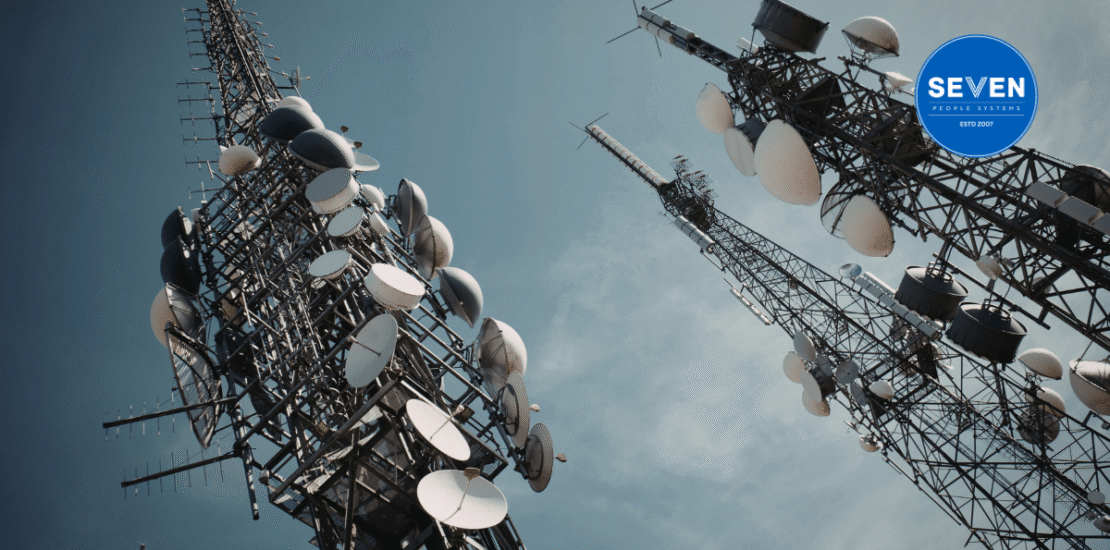
Telecom professionals across Mumbai, Delhi, Bengaluru, Chennai, and Hyderabad face a competitive crisis that grows more intense every year. Network quality determines customer loyalty — and network faults are the fastest route to churn. Fortunately, AI network fault prediction for telecom in India shifts operators from reactive firefighting to proactive fault prevention. It identifies network degradation before customers experience it. Furthermore, AI customer retention for telecom in India uses machine learning to analyse usage patterns. It predicts which customers are at risk of leaving.Meanwhile, AI network optimisation for telecom in India applies intelligent automation to spectrum management and traffic routing. Additionally, AI predictive maintenance for telecom networks in India monitors physical infrastructure continuously. It flags antenna decline and equipment wear before outages occur.
Key Takeaways
- Telecom professionals in India face intense competition, with network quality being crucial for customer loyalty.
- AI network fault prediction for telecom in India enables proactive identification of network issues before they affect customers.
- AI customer retention for telecom in India predicts churn risk and implements targeted interventions to retain at-risk subscribers.
- AI network optimisation for telecom in India improves performance without requiring significant infrastructure investment.
- The AI Telecommunications certification in India from Seven People Systems equips professionals with essential skills to lead AI transformation in telecom.

AI in Telecommunications: Redefining the Future of Seamless Connectivity
- Self-paced course + Official exam + Digital badge
Seven People Systems is India’s authorised AI CERTs® training partner — delivering globally recognised AI certifications to telecom and technology professionals across every major Indian city.
Why Network Quality Is the Biggest Driver of Telecom Churn in India
India’s telecom market is one of the most competitive in the world. Reliance Jio, Airtel, Vi, and BSNL compete for subscribers across every city and region. This includes dense urban centres in Mumbai and Delhi and growing Tier 2 markets in Jaipur, Nagpur, and Bhubaneswar.
In this environment, price differentiation is limited. Every operator offers broadly competitive tariff plans. Consequently, network quality becomes the decisive factor in customer loyalty decisions. An Airtel subscriber in Bengaluru who experiences three dropped calls in a single week is a churn risk. A Jio subscriber in Hyderabad whose video streaming degrades during peak evening hours is actively evaluating alternatives.
Research consistently shows that network quality complaints are the leading driver of telecom churn across Indian subscriber markets. Furthermore, the damage extends beyond the individual churned subscriber. Negative network experiences spread quickly on WhatsApp and Twitter. They influence the switching choices of the churned subscriber’s contacts too.
AI network fault prediction for telecom in India stops this chain of events at the source. It identifies and resolves network quality issues before subscribers ever notice them.
Seven People Systems trains telecom professionals across India to build and operate these AI systems at enterprise scale.
AI Network Fault Prediction — Catching Problems Before Customers Do
AI network fault prediction for telecom in India operates by analysing continuous streams of network performance data — identifying the patterns that precede fault events before those events occur.
Anomaly Detection Across Network Elements
Modern telecom networks in India generate millions of data points per minute. These come from base stations, routers, switches, fibre links, and core network systems. AI anomaly detection models analyse this data in real time. They establish a performance baseline for every network element and flag deviations that indicate developing faults.
A network operations centre engineer in Delhi monitoring a district’s 4G base station network previously reviewed alert dashboards after faults had already affected subscribers. AI network fault prediction for telecom in India changes this workflow entirely. The AI identifies a base station whose signal quality metrics are trending toward failure three to four hours before the failure occurs. The NOC team dispatches a field engineer to investigate during that window — resolving the issue before a single subscriber experiences degradation.
Furthermore, AI network fault prediction for telecom in India reduces false positive alerts — one of the most significant drains on NOC team productivity in Indian telecom operations. Machine learning models distinguish genuine developing faults from normal performance variation with significantly greater accuracy than threshold-based alerting systems. Consequently, NOC engineers in Chennai and Kolkata spend less time investigating false alarms and more time resolving genuine developing faults.
Predictive Root Cause Analysis
When network faults do occur, AI network fault prediction for telecom in India accelerates root cause identification. AI models trained on historical fault data and network topology maps identify the most probable root cause of a fault symptom automatically — reducing mean time to repair by directing engineers to the right network element immediately rather than requiring them to work through a diagnostic process manually.
A fibre cut affecting a neighbourhood in Pune that previously required two to three hours of diagnostic work to localise can be identified and localised by AI root cause analysis in minutes — dramatically reducing both the duration of service disruption and its impact on subscriber experience.
AI in Telecommunications: Redefining the Future of Seamless Connectivity
- Self-paced course + Official exam + Digital badge
AI Customer Retention for Telecom — Intervening Before the Churn Decision
AI customer retention for telecom in India uses machine learning to identify subscribers who are moving toward a churn decision — and triggers targeted retention interventions before that decision becomes final.
Churn Prediction Modelling
AI churn prediction models analyse hundreds of subscriber behaviour signals simultaneously — call drop rates experienced by the subscriber, data speed complaints, customer service contact frequency, recharge pattern changes, usage volume trends, and social media sentiment where linkable. Each signal contributes to a churn probability score that updates continuously as new data arrives.
A Jio subscriber in Mumbai who has experienced four call drops in the past week, contacted customer service twice, and reduced their monthly recharge amount is flagged as a high-churn-risk subscriber. AI customer retention for telecom in India identifies this subscriber and triggers a retention workflow — a personalised outreach offering network quality assurance, a service credit, or a relevant plan upgrade — before the subscriber initiates a port-out request.
Furthermore, AI customer retention for telecom in India segments retention interventions by subscriber value. High-value subscribers receive priority intervention from human retention specialists. Mid-value subscribers receive automated personalised communications. Lower-value subscribers receive self-service retention offers. This tiered approach maximises retention ROI — concentrating human retention resources on the subscribers whose loss would most impact revenue.
Service Quality Personalisation
Beyond churn prediction, AI customer retention for telecom in India enables service quality personalisation — using AI to identify the specific network quality improvements that matter most to each subscriber’s usage profile and proactively delivering them.
A heavy video streaming subscriber in Hyderabad values consistent bandwidth during evening peak hours above all other service attributes. An AI that identifies this preference and prioritises this subscriber’s traffic during peak congestion — while communicating the action to the subscriber — creates a personalised service experience that builds loyalty more effectively than any discount or promotional offer.
AI Network Optimisation — Delivering Better Performance Without Proportional Investment
AI network optimisation for telecom in India applies machine learning to the operational decisions that determine network performance — spectrum allocation, traffic routing, capacity planning, and energy management.
Intelligent Traffic Management
Indian telecom networks experience dramatic traffic variation across time of day, day of week, and geographic location. A Mumbai business district experiences peak data traffic during working hours. A residential suburb experiences peak streaming traffic during evening hours. A stadium in Chennai experiences peak traffic during match days that is fifty times normal baseline.
AI network optimisation for telecom in India adapts resource allocation to these patterns dynamically — shifting capacity to where demand is highest in real time. Consequently, subscriber experience improves during peak periods without requiring the capital investment of additional infrastructure. Furthermore, AI traffic management reduces energy consumption during low-demand periods by dynamically scaling network element power output — delivering both performance improvement and operational cost reduction simultaneously.
5G Network Optimisation
India’s 5G rollout — accelerating across Mumbai, Delhi, Bengaluru, Chennai, Hyderabad, Pune, and Ahmedabad — creates new optimisation challenges that AI is uniquely equipped to address. 5G networks are significantly more complex than 4G — with more network elements, more dynamic spectrum management requirements, and more intricate interference management challenges.
AI network optimisation for telecom in India in 5G environments applies deep learning models to spectrum management, beamforming optimisation, and interference coordination — delivering network performance improvements that manual optimisation cannot achieve at the required speed and granularity. Telecom engineers in Bengaluru and Delhi who combine AI network fault prediction for telecom in India with AI 5G optimisation consistently deliver subscriber experiences that create competitive differentiation in the market.
AI Predictive Maintenance for Telecom Networks — Protecting the Physical Infrastructure
AI predictive maintenance for telecom networks in India monitors the physical infrastructure that the network runs on — antennas, power systems, fibre cables, transmission equipment, and data centre hardware — identifying developing degradation before it causes outages.
India’s telecom infrastructure operates across some of the most challenging physical environments in the world. Coastal installations in Mumbai and Chennai face salt air corrosion. Equipment in Rajasthan and Gujarat operates in extreme heat. Infrastructure in Bihar and Assam faces monsoon flooding risk. Each environment creates specific degradation patterns that AI predictive maintenance for telecom networks in India learns to identify and flag.
Consequently, AI predictive maintenance for telecom networks in India shifts maintenance activity from scheduled replacement on fixed intervals to condition-based intervention at the optimal point — reducing both maintenance cost and outage frequency simultaneously.
The AI Telecommunications certification in India from Seven People Systems covers all of these capabilities — AI network fault prediction, customer retention modelling, network optimisation, predictive maintenance, 5G AI applications, IoT integration, and ethical AI deployment in telecom — through forty hours of on-demand content, interactive labs, and a real-world telecom capstone project.
Explore the AI+ Telecommunications™ certification here.
How to Implement AI Network Fault Prediction in Telecom — Step-by-Step
- Audit Your Network Performance Data Infrastructure
Identify every data source your network currently generates — base station performance counters, alarm logs, trouble ticket systems, subscriber complaint records, and field engineer reports. AI network fault prediction for telecom in India requires rich, consistent data streams to train accurate prediction models. Assess data quality, completeness, and accessibility before selecting any AI tool.
- Define Your Priority Fault Types
Identify the five fault types that cause the most subscriber impact and the highest operational cost in your network. These are your priority targets for AI network fault prediction for telecom in India. Start your AI programme with these fault types and expand to lower-impact faults once the initial models are validated.
- Deploy AI Anomaly Detection on Priority Network Elements
Configure AI anomaly detection on the network elements most associated with your priority fault types. Establish performance baselines. Set alert sensitivity thresholds. Review the first month of alerts with your NOC team to calibrate the model and reduce false positives.
- Build Your Churn Prediction Model
Feed subscriber behaviour data — call quality metrics, complaint history, recharge patterns, and usage trends — into your AI customer retention for telecom in India churn prediction model. Validate predictions against known churned subscribers before deploying the model for live intervention.
- Integrate AI Alerts into Your Retention Workflow
Define exactly what action your retention team takes when the AI flags a high-churn-risk subscriber. Who contacts them? Within what timeframe? What intervention is offered? AI customer retention for telecom in India delivers its greatest value when the intervention workflow is defined, practised, and fast.
AI in Telecommunications: Redefining the Future of Seamless Connectivity
- Self-paced course + Official exam + Digital badge
FAQ
AI network fault prediction for telecom in India typically begins generating useful anomaly alerts within the first four to eight weeks of deployment — as the AI establishes performance baselines and begins identifying deviations. Prediction accuracy improves continuously as the model accumulates more operational data.
Yes — though the churn signals differ significantly between prepaid and postpaid segments. AI customer retention for telecom in India for prepaid subscribers focuses on recharge frequency changes, data consumption patterns, and call quality experiences.
The AI Telecommunications certification in India covers AI fundamentals in telecom, AI network fault prediction for telecom in India, AI network optimisation for telecom in India, AI customer retention for telecom in India, AI predictive maintenance for telecom networks in India, 5G AI applications, IoT integration, network security, and ethical AI deployment — through forty hours of on-demand content, interactive labs, and a real-world telecom capstone project.
Final Thought
AI network fault prediction for telecom in India prevents the network quality failures that drive subscriber churn across Mumbai, Delhi, Bengaluru, Chennai, Hyderabad, Kolkata, Pune, Ahmedabad, and Jaipur. Consequently, at-risk subscribers are caught before they port out through AI customer retention for telecom in India — with personalised interventions that rebuild loyalty. Furthermore, better performance without proportional infrastructure investment arrives through AI network optimisation for telecom in India. Moreover, the physical infrastructure that the entire subscriber experience depends on stays protected through AI predictive maintenance for telecom networks in India. Therefore, the AI Telecommunications certification in India from Seven People Systems gives every telecom professional the knowledge to lead all of this.
Apply the six-step framework in this article to build your AI telecom programme. Then formalise your expertise with the AI+ Telecommunications™ certification from Seven People Systems — the AI CERTs® authorised training partner for telecom professionals across India.
Visit Seven People Systems to explore the full range of AI certifications available for technology and telecom professionals across India.
Latest Blog
- How to Drive Organizational Culture Change That Actually Sticks
- How to Ensure Your AI Systems Stay Compliant With Global Data Privacy Regulations
- How to Use AI in Finance Without Compromising Accuracy, Compliance, or Your Judgment
- How to Build AI-Powered Dashboards That Give Decision-Makers Real Answers, Not Just Data
- How to Use AI to Automate QA Testing and Catch Defects Before They Reach Customers