How to Use AI to Accelerate Drug Discovery Research and Streamline Regulatory Submissions
- June 1, 2026
- Posted by: info@seven.net.in
- Category: AI Certification
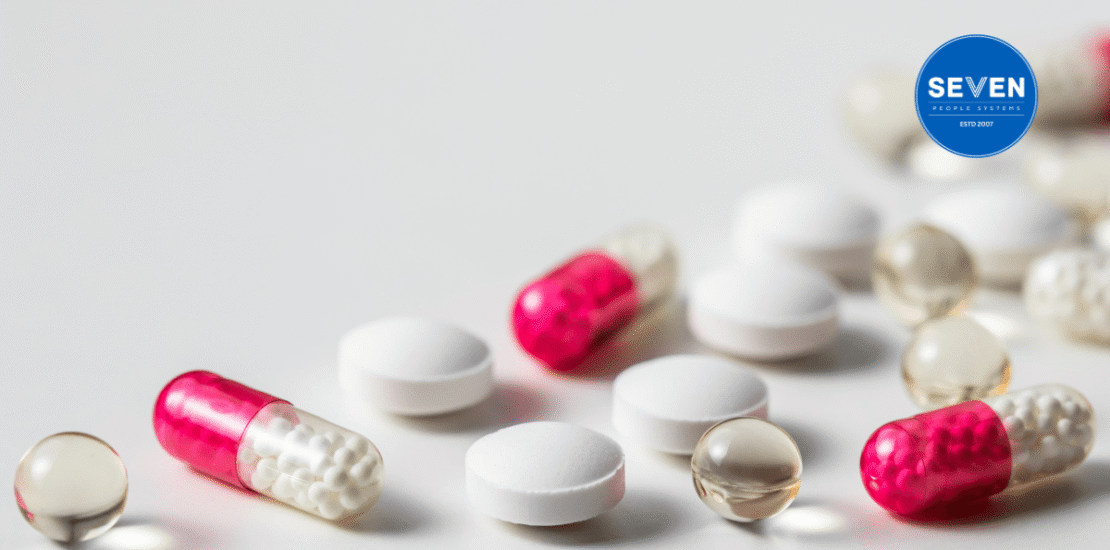
Indian pharmaceutical companies and biotech firms in Mumbai, Hyderabad, Bengaluru, Pune, and Chennai face intense global competition. They must deliver new therapies faster while controlling risk and cost. Many of them now use AI drug discovery research, AI clinical trial optimisation in India, AI regulatory submissions for pharma in India, and AI precision medicine in India to achieve this. AI‑driven drug discovery compresses years of compound screening into months. At the same time, AI clinical trial optimisation in India helps contract research organisations recruit better patients faster. Regulatory affairs teams adopt AI regulatory submissions for pharma in India to speed up CDSCO filings. Leading hospitals pilot AI precision medicine in India to personalise therapy decisions. Together, these AI capabilities are transforming how India’s life sciences sector discovers, develops, and approves new medicines. Seven People Systems supports this shift through the AI+ Pharma™ certification and other AI programmes available on Seven People Systems.
Key Takeaways
- AI drug discovery research in India accelerates drug development, reducing timelines from years to months by applying machine learning.
- AI clinical trial optimisation in India enhances patient selection, recruitment speed, and safety signal detection, lowering trial costs and improving success rates.
- AI regulatory submissions for pharma in India automate dossier preparation and compliance monitoring, cutting down resource use and time significantly.
- AI precision medicine in India personalizes treatments based on individual genetic data, improving therapeutic outcomes and aligning with regulatory requirements.
- The AI Pharma certification in India equips professionals with essential skills in AI applications for drug discovery, clinical trials, regulatory processes, and precision medicine.
Harness AI in Pharma™ to speed drug discovery, optimize trials, and enable precision therapies.
- Self-paced course + Official exam + Digital badge
Seven People Systems is India’s authorised AI CERTs® training partner — delivering globally recognised AI certifications to pharmaceutical and life sciences professionals across every major Indian city.
Why Indian Pharma Cannot Afford to Delay AI Adoption
In India, drug discovery and regulatory submissions often suffer from long timelines and high costs. Traditional discovery workflows rely on manual literature review, fragmented data sources, and sequential experiments. Each step adds delay. Regulatory submissions for new drugs and indications must also comply with CDSCO, ICH, and other global standards. This combination increases complexity for Indian regulatory affairs teams.
AI drug discovery research and AI clinical trial optimisation in India help companies analyse genomic, chemical, and clinical data at scale. They reduce the dependence on manual review. As a result, R&D teams in Mumbai and Hyderabad can prioritise the most promising targets and compounds earlier. In parallel, AI regulatory submissions for pharma in India support teams in Bengaluru and Chennai by automating dossier assembly and running consistency checks. They also monitor guideline changes across CDSCO and international bodies. When organisations combine these tools with AI precision medicine in India, they can design development programmes that fit Indian patients more closely and move through approval faster.
AI Drug Discovery Research — Compressing the Research Timeline
AI drug discovery research in India starts with data that Indian pharmaceutical and biotech companies already own. Molecule libraries, screening results, genomic data, and clinical outcomes sit in different systems. The first step is to bring this data together and clean it. Once data is standardised, machine‑learning models can search the combined space for the best targets and compounds.
Discovery teams in Hyderabad and Pune can use AI‑driven tools to analyse thousands of potential biological targets at once. The models rank targets by disease relevance, safety, and tractability. They can also process Indian real‑world data from hospital networks. This helps teams see how different Indian patient groups respond to existing therapies. It reduces the risk that later AI clinical trial optimisation in India will reveal poor response rates in key Indian populations.
Indian medicinal chemists can then use generative AI models to design new compounds. These compounds are optimised for potency, selectivity, and predicted ADMET properties. Instead of running large wet‑lab screens across entire libraries, labs in Bengaluru and Chennai can test a shorter list of AI‑selected candidates. Fewer experiments are needed. As a result, AI drug discovery research in India shortens discovery timelines and reduces screening costs. It also feeds higher‑quality candidates into AI clinical trial optimisation in India and AI precision medicine in India.
AI Clinical Trial Optimisation — Faster, Smarter, Safer Development
Once a candidate moves into clinical development, AI clinical trial optimisation in India helps sponsors and CROs design and run trials more efficiently. The first step is patient stratification. For trials in Mumbai or Delhi, this means site teams can pre‑screen hospital databases for patients whose profiles match the ideal responder group.
During active recruitment, AI clinical trial optimisation in India uses natural language processing to scan unstructured clinical notes and referral letters. Instead of relying only on manual chart review, site coordinators in Hyderabad and Chennai receive AI‑filtered candidate lists with inclusion and exclusion flags already applied. This reduces screening failure rates, accelerates randomisation, and increases the likelihood of a statistically successful outcome.
AI clinical trial optimisation in India also strengthens safety monitoring. Machine‑learning models can analyse adverse event data, lab values, and concomitant medications in near real time. Pharmacovigilance teams in Pune and Ahmedabad can detect emerging safety signals earlier, adjust protocols, and communicate proactively with regulators.
AI Regulatory Submissions for Pharma — From Dossier Preparation to CDSCO Approval
AI regulatory submissions for pharma in India address one of the most resource‑intensive parts of pharmaceutical development.
Automated Dossier Preparation
A Common Technical Document dossier for a new drug application contains hundreds of documents across quality, safety, and efficacy modules. Preparing these documents manually requires months of regulatory affairs team time.
AI regulatory submissions for pharma in India automate the extraction and formatting of data from clinical study reports. They generate structured document summaries and check cross‑document consistency automatically. Regulatory teams in Mumbai and Hyderabad that use AI dossier‑preparation tools consistently reduce preparation time by 40 to 60 percent. This shift redirects experienced regulatory‑affairs professionals from document formatting to strategic submission planning.
Regulatory Intelligence and Compliance Monitoring
CDSCO guidelines, ICH requirements, and international regulatory standards change continuously. AI regulatory submissions for pharma in India apply natural‑language processing to regulatory guidance documents. They automatically identify changes that are relevant to a specific drug programme and flag the compliance implications for the regulatory‑affairs team. As a result, regulatory professionals in Bengaluru and Chennai spend less time monitoring regulatory changes and more time managing their strategic responses.
Harness AI in Pharma™ to speed drug discovery, optimize trials, and enable precision therapies.
- Self-paced course + Official exam + Digital badge
AI Precision Medicine — From Population Averages to Individual Patients
AI precision medicine in India is the most clinically significant use of AI in pharmaceutical development. It enables companies to match therapies to the individual biological characteristics of each patient instead of treating every patient with the same dose of the same drug.
India’s patient population carries significant genetic diversity. Pharmacogenomic variations that affect drug metabolism, efficacy, and adverse‑event risk differ across Indian ethnic groups and between Indian populations and the Western populations in which most drugs are clinically developed.
AI precision medicine in India uses machine‑learning models on pharmacogenomic data, biomarker profiles, and clinical outcomes. These models identify the patient groups in India who respond optimally to specific therapies. Oncology programmes at cancer research institutes in Mumbai, Hyderabad, and Chennai already use this approach to match targeted therapies to tumour profiles, improving response rates and reducing exposure to ineffective treatments.
In addition, AI precision medicine in India generates the biomarker‑defined patient‑stratification data that regulatory authorities increasingly require for new drug approvals. This creates a direct link between AI‑enabled precision medicine and successful AI regulatory submissions for pharma in India.
The AI Pharma certification in India from Seven People Systems covers all of these capabilities. It spans AI drug discovery research in India, AI clinical trial optimisation in India, AI regulatory submissions for pharma in India, AI precision medicine in India, pharmacovigilance, real‑world evidence analysis, and a real‑world pharma AI capstone project.
Explore the AI+ Pharma™ certification here.
How to Implement AI in Pharma Research — Step-by-Step
- Identify Your Highest-Impact AI Use Case
Map your current drug development pipeline and identify the stage where failure rates are highest, timelines are longest, or costs are greatest. For most Indian pharmaceutical organisations, this is either target validation, clinical recruitment, or regulatory dossier preparation. Start your AI drug discovery research in India programme at the highest-impact point first.
- Assess Your Data Infrastructure
AI drug discovery, clinical trial optimisation, and regulatory submission tools all require structured, accessible data. Assess whether your genomic data, clinical trial databases, electronic health records, and regulatory document repositories are stored in formats that AI tools can easily access and analyse. AI precision medicine in India is the most clinically significant use of AI in pharmaceutical development.
- Select AI Tools Matched to Your Use Case
Choose AI tools specifically validated for pharmaceutical applications — not general-purpose machine learning platforms. AI clinical trial optimisation in India tools require validation against clinical outcomes data. AI regulatory submissions for pharma in India tools require compliance with CDSCO and ICH formatting standards. Validate every tool against your specific regulatory context before deployment.
- Run a Pilot Programme
Deploy your chosen AI tool on a single drug programme or clinical trial as a pilot. Define clear success metrics before starting — time saved, compounds screened, patients recruited, or documents prepared. Review pilot results before expanding to additional programmes.
- Build Internal AI Capability
AI tools deliver their greatest value when your internal team understands how they work and how to interpret their outputs. Invest in structured training — including the AI Pharma certification in India from Seven People Systems — to ensure your R&D, clinical, and regulatory teams can evaluate, validate, and improve AI outputs rather than simply accepting them.
Harness AI in Pharma™ to speed drug discovery, optimize trials, and enable precision therapies.
- Self-paced course + Official exam + Digital badge
FAQ
CDSCO’s guidance on AI in pharmaceutical development continues to evolve. Currently, AI regulatory submissions for pharma in India that use AI tools for data analysis, dossier preparation, or literature review are permissible — provided the scientific conclusions are validated and signed off by qualified pharmaceutical scientists and regulatory affairs professionals.
AI drug discovery research in India compresses development timelines, improves target selection accuracy, and reduces the proportion of compounds that fail in expensive clinical development.
The AI Pharma certification in India covers AI-driven drug discovery and target identification, molecule screening, AI clinical trial optimisation in India, pharmacovigilance, AI regulatory submissions for pharma in India, AI precision medicine in India, real-world evidence analysis, predictive analytics, and a capstone project applying AI to a real pharmaceutical challenge.
Final Thought
AI drug discovery research in India compresses development timelines, improves target selection accuracy, and reduces the proportion of compounds that fail AI clinical trial optimisation in India selects better patients, recruits faster, and detects safety signals earlier. In parallel, AI regulatory submissions for pharma in India reduce dossier preparation time and improve submission quality.
Apply the six-step framework in this article to build your pharma AI programme. Then formalise your expertise with the AI+ Pharma™ certification from Seven People Systems
Visit Seven People Systems to explore the full range of AI certifications
Latest Blogs
- How to Drive Organizational Culture Change That Actually Sticks
- How to Ensure Your AI Systems Stay Compliant With Global Data Privacy Regulations
- How to Use AI in Finance Without Compromising Accuracy, Compliance, or Your Judgment
- How to Build AI-Powered Dashboards That Give Decision-Makers Real Answers, Not Just Data
- How to Use AI to Automate QA Testing and Catch Defects Before They Reach Customers