
How to Engineer Robust AI Pipelines That Perform Reliably in Production Environments
- May 4, 2026
- Posted by: info@seven.net.in
- Category: AI Certification
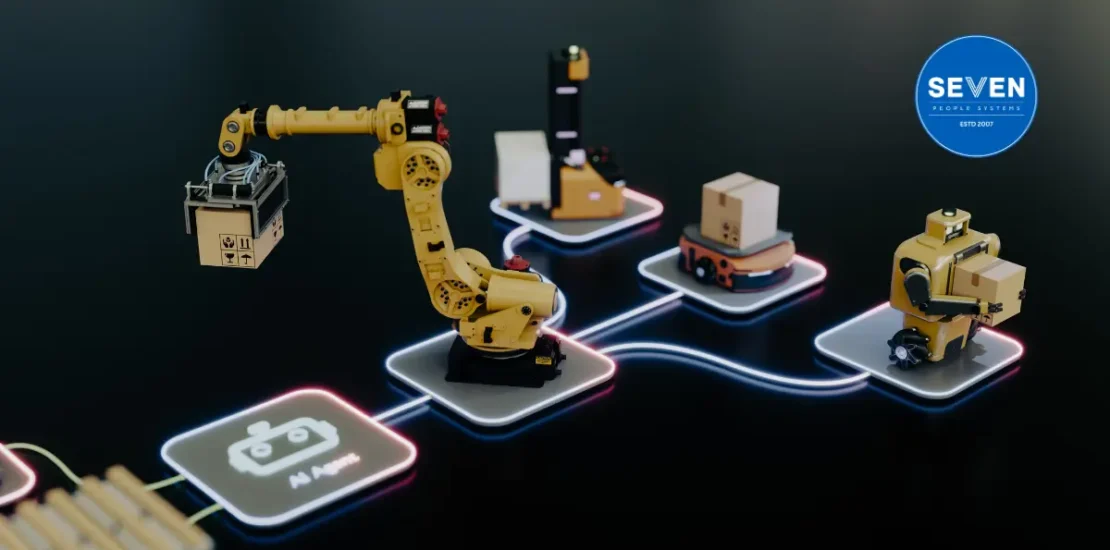
Building robust AI pipelines for production environments is no longer a nice-to-have skill — it is the defining competency of a modern AI engineer. If you want to master AI pipeline engineering best practices, unlock machine learning model deployment in India‘s fast-growing enterprise sector, and design scalable AI system architecture that does not collapse under real-world pressure, this guide gives you the complete blueprint. Earning a recognised AI engineer certification in India gives you the structured foundation to apply every principle covered here with confidence.
Key Takeaways
- Building robust AI pipelines for production environments is critical for modern AI engineers, ensuring scalable and resilient architectures.
- Common failures in AI pipelines include data quality degradation, model drift, and lack of observability for monitoring issues.
- Employ modular design, data validation, and automated retraining to create reliable and efficient AI systems.
- Implement security measures at every layer of the pipeline to protect against data breaches and comply with regulations.
- AI+ Engineer™ certification helps professionals master MLOps and pipeline engineering, preparing them for enterprise deployment challenges.

Innovate Engineering: Leverage AI-Driven Smart Solutions
Self-paced course + Official exam + Digital badge
Why AI Pipelines Fail in Production
Most AI projects that succeed in a lab setting break down the moment they go live. The reasons are predictable — and preventable.
Data distributions shift after deployment. Infrastructure that works for 1,000 requests buckles under 100,000. Models that score well on a test set drift silently in production without triggering any alert. Teams in metro cities like Mumbai, Delhi, and Bengaluru face these challenges daily as they scale AI from pilot projects to enterprise-wide rollouts.
Understanding why pipelines fail is the first step to engineering ones that do not. The most common failure points are:
- Data quality degradation upstream of the model
- Model drift caused by real-world distribution shift
- Infrastructure bottlenecks at inference time
- Lack of observability — no monitoring, no alerting, no rollback plan
- Tight coupling between pipeline components that breaks on any upstream change
Step 1: Design for Failure from Day One
Resilient pipelines are not built by accident. They result from deliberate architectural decisions made before a single line of code is written. Therefore, adopt a fault-tolerant design mindset at the outset.
Use modular, loosely coupled components. Each stage — data ingestion, preprocessing, model inference, post-processing, and output delivery — must operate independently. When one stage fails, it should fail gracefully without cascading across the system.
Additionally, build retry logic, dead-letter queues, and circuit breakers into every integration point. Enterprises in Hyderabad and Pune deploying AI in fintech, healthcare, and logistics cannot afford silent failures that corrupt downstream decisions.
Key Architectural Patterns to Apply:
- Microservices-based pipeline design — isolate each processing stage
- Event-driven architecture — decouple producers and consumers using message queues (Kafka, Pub/Sub)
- Shadow mode deployment — run the new model in parallel with the current one before switching traffic
Step 2: Enforce Rigorous Data Validation
Your model is only as reliable as the data feeding it. Consequently, data validation is not a pre-launch checklist item — it is a continuous, automated process baked into every pipeline run.
Implement schema validation at every ingestion point. Reject or quarantine records that violate expected data contracts. Use statistical checks to catch distribution shifts before they reach your model.
Tools Worth Integrating:
- Great Expectations — for dataset assertions and automated data docs
- Apache Griffin — popular with data engineering teams across Indian enterprises
- Evidently AI — for data and model monitoring in production
Furthermore, version your datasets alongside your models. When a model behaves unexpectedly in production, you need to reproduce the exact data state that triggered it.
Step 3: Build a Production-Grade ML Model Deployment Strategy
Deploying an AI model is not the finish line — it is the starting point of an ongoing operational responsibility. Indeed, machine learning model deployment in India has become a critical enterprise priority, especially for tech teams scaling AI across Mumbai, Bengaluru, and Delhi. Solid machine learning model deployment in India’s enterprise context requires a structured MLOps workflow.
Follow a CI/CD pipeline for ML that automates testing, validation, and rollout at every model update cycle. Use containerisation (Docker, Kubernetes) to guarantee that your model behaves identically across development, staging, and production environments.
Deployment Strategies That Reduce Risk:
- Blue-green deployment — maintain two identical environments; switch traffic only after validation
- Canary releases — roll out to 5–10% of traffic first, monitor KPIs, then promote
- Feature flags — decouple model release from code release for finer control
As machine learning model deployment in India continues to mature, enterprises across Mumbai, Bengaluru, and Delhi are standardising on these exact strategies to reduce go-live risk. Teams in Bengaluru’s tech corridors and Delhi’s enterprise IT hubs have increasingly adopted these patterns as AI moves from experimentation to core business infrastructure.
Step 4: Implement End-to-End Pipeline Observability
You cannot improve what you cannot see. Therefore, observability is the essential backbone of any robust AI pipeline. It covers three pillars: logging, monitoring, and alerting. Moreover, teams that skip this step are always the last to know when something goes wrong. In contrast, teams that invest in observability catch issues before users ever notice them.
Log every prediction, input feature vector, and output confidence score. Monitor model performance metrics (accuracy, latency, throughput, drift scores) in real time. Set automated alerts that trigger human review when metrics cross defined thresholds.
Recommended Observability Stack:
- Prometheus + Grafana — for infrastructure and latency metrics
- MLflow — for experiment tracking and model registry
- Arize AI / WhyLabs — for production ML monitoring and drift detection
Observability is what separates teams that react to failures from teams that predict and prevent them.
Step 5: Automate Retraining and Model Refresh Cycles
Over time, static models decay. As real-world data shifts, your model’s predictions grow outdated and unreliable. Consequently, building automated retraining pipelines ensures your AI systems stay accurate without constant manual effort. Furthermore, automated retraining saves your team hours every week while keeping production performance stable.
Set trigger-based retraining — either on a schedule (weekly, monthly) or when performance metrics drop below a defined threshold. Automate model evaluation against a held-out validation set and gate production promotion behind a performance benchmark.
Critically, every retrained model must pass the same validation gates as the original. Do not let automation bypass quality control.
Step 6: Secure Your Pipeline at Every Layer
Unfortunately, security in AI pipelines is often treated as an afterthought. However, in regulated industries — BFSI, healthcare, and government — operating across Mumbai, Delhi, and Hyderabad, it is a strict compliance requirement. In addition, a single data breach in a production AI system can result in significant regulatory penalties and loss of client trust. Therefore, building security in from day one is always the smarter choice.
Apply these security controls consistently:
- Encrypt data at rest and in transit across all pipeline stages
- Role-based access control (RBAC) on model endpoints and data stores
- Input validation and adversarial input detection to prevent model manipulation
- Audit logging for every model call, especially in high-stakes decision systems
Regulators in India are increasingly scrutinising AI systems used in lending, insurance, and public services. Building security in from the start protects both your users and your organisation.
Innovate Engineering: Leverage AI-Driven Smart Solutions
Self-paced course + Official exam + Digital badge
Step 7: Document, Test, and Govern Continuously
Robust AI pipelines need governance frameworks, not just code. Document every decision: why a model was chosen, what data it was trained on, what its known limitations are, and who approved it for production.
Write unit tests for preprocessing functions, integration tests for pipeline stages, and load tests for inference endpoints. Governance is what converts a working pipeline into a trustworthy one — and trustworthiness is what enterprises in India’s metro cities ultimately require before they scale AI organisation-wide.
HOW-TO BLOCK
How to Set Up a Robust AI Pipeline for Production
- Define pipeline stages
Map data ingestion, preprocessing, model serving, and output delivery as independent modules.
- Validate data contracts
Use schema checks and statistical tests at every ingestion point.
- Containerise your model
Package using Docker; orchestrate with Kubernetes for environment consistency.
- Choose a deployment strategy
Apply blue-green or canary releases to reduce go-live risk.
- Instrument observability
Add logging, metrics, and alerts from day one using Prometheus, Grafana, and MLflow.
- Automate retraining
Set performance-based triggers and gate promotion behind validation benchmarks.
- Apply security controls
Encrypt data, enforce RBAC, and enable audit logging at every layer.
- Govern and document
Maintain model cards, approval records, and test coverage reports.
Accelerate Your AI Engineering Career with AI+ Engineer™
All the concepts above — MLOps, pipeline architecture, model deployment, observability — are core modules inside the AI+ Engineer™ certification programme at Seven People Systems. This programme is purpose-built for IT professionals, data engineers, and technology managers across India’s metros who want to move confidently from AI experimentation to production-grade engineering.
📄 Download the AI+ Engineer™ Course Flyer (PDF) to review the full curriculum, eligibility criteria, and certification pathway.
Whether you are in Mumbai, Delhi, Bengaluru, Hyderabad, or Pune, this certification equips you with the hands-on skills that Indian enterprises are actively hiring for right now.
👉 Enroll in AI+ Engineer™ Today →
Latest Post
- How to Drive Organizational Culture Change That Actually Sticks
- How to Ensure Your AI Systems Stay Compliant With Global Data Privacy Regulations
- How to Use AI in Finance Without Compromising Accuracy, Compliance, or Your Judgment
- How to Build AI-Powered Dashboards That Give Decision-Makers Real Answers, Not Just Data
- How to Use AI to Automate QA Testing and Catch Defects Before They Reach Customers
Innovate Engineering: Leverage AI-Driven Smart Solutions
Self-paced course + Official exam + Digital badge