How to Use AI to Modernise Government Service Delivery in India and Reduce Citizen Wait Times
- May 21, 2026
- Posted by: info@seven.net.in
- Category: AI Certification
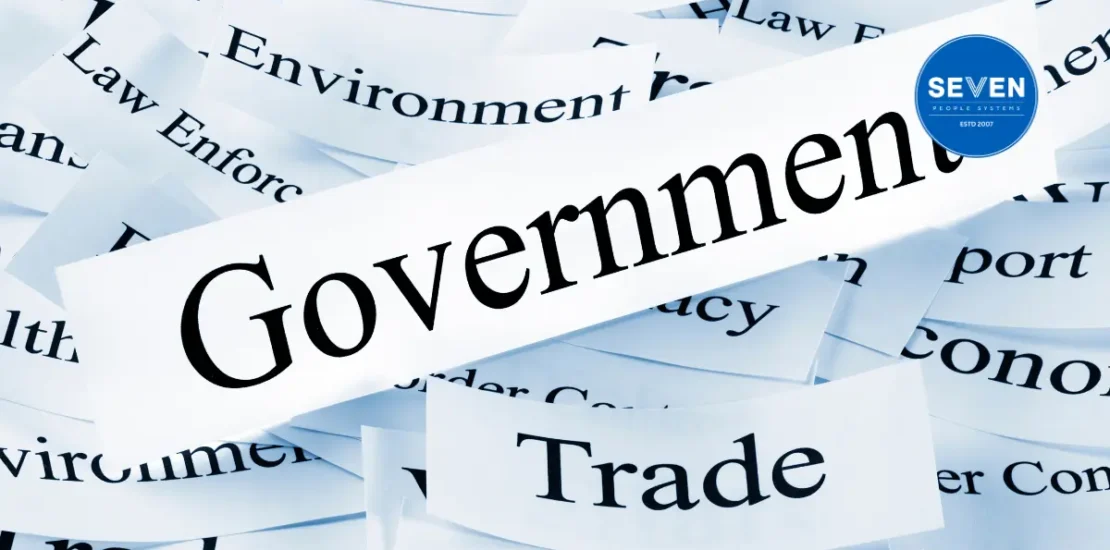
The transformation of AI government service delivery in India is no longer a pilot programme — it is a national imperative. With over 1.4 billion citizens depending on public services daily, the urgency of reducing citizen wait times in India with AI has never been greater. From deploying AI-powered e-governance solutions in India at state and municipal levels to building intelligent public administration automation in India that eliminates paper-based backlogs, the opportunity is enormous. For IAS officers, municipal IT heads, and govtech leaders across Mumbai, Delhi, Bengaluru, Hyderabad, and Pune, an AI Government certification in India is the structured pathway to turning this opportunity into measurable public impact.
Key Takeaways
- AI government service delivery in India is essential for improving public services and reducing citizen wait times.
- AI technologies like chatbots and automated document processing enhance efficiency in public administration.
- India’s digital infrastructure supports the rapid deployment of AI in governance, making it a global leader in this area.
- Implementing AI requires a phased approach, including service audits and staff training, to ensure successful outcomes.
- The AI+ Government certification provides essential skills for public sector leaders to drive AI transformation effectively.
Transform Public Policy with Intelligent Solutions
Self-paced course + Official exam + Digital badge
Why AI Government Service Delivery in India Is a National Priority
India’s government machinery handles one of the largest service delivery workloads on earth. Every day, millions of citizens interact with public systems across thousands of offices nationwide. Land records, ration cards, birth certificates, pension disbursements, passport applications, tax filings — millions of these transactions happen every single day across thousands of offices nationwide.
Legacy systems and paper workflows create persistent bottlenecks. Siloed databases and inadequate staffing make things worse every day. Consequently, citizens in Delhi queue for hours for services that should take minutes. Officials in Mumbai spend most of their working day on manual data entry rather than governance.
AI addresses each of these failures directly. Furthermore, India’s existing digital infrastructure — Aadhaar, DigiLocker, UMANG, UPI, and the India Stack — gives the country a unique head start in deploying AI at government scale faster than almost any other nation.
How AI Is Transforming Government Service Delivery Across India
Conversational AI for 24/7 Citizen Support
AI-powered chatbots and virtual assistants are the most visible face of modern e-governance. Citizens in Bengaluru, Hyderabad, and Pune can now query application status, book appointments, and receive document guidance through WhatsApp bots and state government portals — at any hour, in their preferred language.
Multilingual AI support covers Hindi, Tamil, Telugu, Marathi, Kannada, and Bengali. This ensures digital government services reach citizens well beyond metro cities. Moreover, AI chatbots handle thousands of simultaneous interactions without any increase in staffing costs — a transformational efficiency gain for resource-constrained government departments.
Automated Document Verification and Processing
Manual document verification is one of India’s most persistent government service bottlenecks. AI-powered OCR and document intelligence tools extract, validate, and cross-reference data from identity documents, land records, income certificates, and application forms — in seconds.
Additionally, real-time integration with Aadhaar and DigiLocker allows AI systems to authenticate citizen identity and verify document legitimacy without physical submission. Consequently, certificate issuance that previously required multiple office visits now completes entirely online within minutes.
Predictive Analytics for Smarter Service Planning
Government service centres have historically reacted to demand rather than anticipating it. AI changes this. Predictive models analyse historical service volumes, seasonal demand patterns, geographic distributions, and demographic data to forecast exactly when and where demand will peak.
Therefore, district collectors and municipal commissioners in Hyderabad and Delhi can pre-deploy staff, extend digital service windows, and manage physical footfall proactively — before queues form and citizen frustration builds.
Reducing Citizen Wait Times in India With AI: The Highest-Impact Applications
Reducing citizen wait times in India with AI is not a single intervention — it is a layered strategy operating simultaneously across service channels. The most impactful current applications include:
- Smart queue management systems — AI allocates service tokens dynamically based on officer availability, application complexity, and real-time processing throughput at Seva Kendras and Common Service Centres
- Intelligent case triage — machine learning models classify incoming applications by complexity, auto-approve straightforward cases, and route complex ones to officers with pre-populated summaries
- Proactive SMS and WhatsApp notifications — AI sends personalised, stage-by-stage application updates to citizens, eliminating unnecessary follow-up visits entirely
- AI-powered service kiosks — deployed at railway stations, post offices, and community centres across tier-2 and tier-3 cities, extending service access beyond traditional office hours and urban centres
AI-Powered E-Governance in India: What Progress Looks Like
India is already among the world’s leading nations in AI-driven e-governance adoption. Several state-level programmes demonstrate what is achievable at scale.
Telangana has integrated AI into land record management and property registration, cutting processing times from weeks to hours. Karnataka’s Bhoomi system uses AI-assisted verification to handle millions of land record queries annually. Delhi’s e-District portal processes certificate applications with AI-assisted document review, significantly reducing officer workload and error rates.
At the national level, NITI Aayog’s National AI Strategy explicitly prioritises AI in public service delivery. Furthermore, the Digital India programme has created the interoperable data and identity infrastructure that makes AI e-governance solutions technically and financially viable for every Indian state government.
Transform Public Policy with Intelligent Solutions
Self-paced course + Official exam + Digital badge
Intelligent Public Administration Automation in India: A Phased Framework
Successfully implementing intelligent public administration automation in India requires a structured, phased approach. Rushing adoption without proper foundations creates new problems rather than solving existing ones.
Phase 1: Service Audit and Prioritisation
Map every citizen-facing service by transaction volume, average processing time, error rate, and citizen satisfaction score. Prioritise high-volume, rule-based services — certificate issuance, status enquiries, appointment bookings — for the first automation wave.
Phase 2: Data Readiness and Governance
AI is only as reliable as the data it processes. Therefore, audit all departmental databases for completeness, accuracy, and interoperability. Establish data governance standards fully aligned with India’s Digital Personal Data Protection (DPDP) Act 2023 before any live deployment.
Phase 3: Controlled Pilot Deployment
Deploy AI solutions in a single district or department first. Define clear success metrics — processing time, citizen satisfaction, officer productivity, error rate — and measure them rigorously throughout the pilot. Use this evidence base to secure approval and funding for scaled rollout.
Phase 4: Staff Training and Change Management
Technology alone does not transform public administration. Importantly, government officers need structured AI literacy training to use, manage, and improve AI systems effectively. Investing in people is as important as investing in platforms.
Citizen Data Privacy in AI-Powered Government Systems
As AI processes increasing volumes of citizen data, privacy and security become fundamental governance responsibilities. India’s DPDP Act 2023 establishes clear obligations for government entities: purpose limitation, data minimisation, informed consent, breach notification, and grievance redressal mechanisms.
Additionally, AI systems used in high-stakes decisions — welfare eligibility, law enforcement, financial entitlements — must maintain complete audit trails that support citizen appeals and judicial review. Governments that embed privacy and transparency into their AI systems from the outset earn citizen trust faster and face fewer regulatory obstacles during scale-up.
HOW-TO BLOCK
How to Implement AI in Government Service Delivery in India
- Audit all citizen-facing services
map by volume, processing time, and error rate to identify automation priorities.
- Assess data readiness
verify database completeness and DPDP Act 2023 compliance before deployment.
- Start with high-volume, rule-based services
certificate issuance and status updates deliver fast, low-risk results.
- Deploy multilingual conversational AI
launch chatbots on WhatsApp, UMANG, and state portals for 24/7 citizen access.
- Integrate with Aadhaar and DigiLocker
enable real-time identity and document verification digitally.
- Implement smart queue management
use AI to dynamically allocate tokens and reduce peak-hour wait times
- Pilot in one district first
measure outcomes rigorously before scaling statewide or nationally.
- Train government staff in AI literacy
sustainable transformation requires people, not just platforms.
Lead India’s Government AI Transformation with AI+ Government Certification
Every strategy in this guide — e-governance automation, citizen AI chatbots, predictive service planning, data privacy governance — is a core curriculum module inside the AI+ Government certification at Seven People Systems. This programme is built specifically for IAS/IPS officers, municipal administrators, state IT heads, and govtech consultants across India who want to lead AI-driven public sector transformation with real expertise.
📄 Download the AI+ Government Course Flyer (PDF) to explore the full curriculum, prerequisites, and certification pathway.
Want to build deeper technical AI skills alongside your governance expertise? Explore our AI+ Engineer™ certification for production AI pipeline skills, or the AI+ Healthcare certification for AI in India’s public health sector.
Whether you are in Mumbai, Delhi, Bengaluru, Hyderabad, or Pune — India’s AI governance revolution is happening now. This certification ensures you lead it.
👉 Enroll in AI+ Government Certification Today →
Latest Post
- How to Drive Organizational Culture Change That Actually Sticks
- How to Ensure Your AI Systems Stay Compliant With Global Data Privacy Regulations
- How to Use AI in Finance Without Compromising Accuracy, Compliance, or Your Judgment
- How to Build AI-Powered Dashboards That Give Decision-Makers Real Answers, Not Just Data
- How to Use AI to Automate QA Testing and Catch Defects Before They Reach Customers
Transform Public Policy with Intelligent Solutions
Self-paced course + Official exam + Digital badge