How to Use Natural Language Prompts to Build AI Features Without Writing Everything From Scratch
- May 3, 2026
- Posted by: info@seven.net.in
- Category: AI Certification
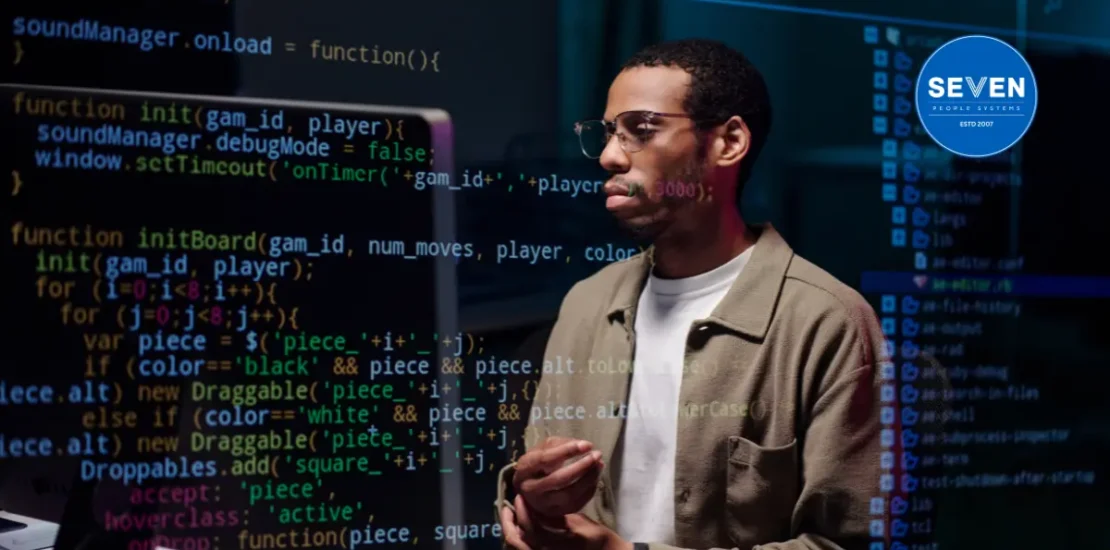
The ability to use natural language prompts to build AI features has fundamentally changed what it means to be a developer in 2026. Whether you embrace vibe coding with AI tools, practice prompt-driven software development, or simply want to accelerate AI feature development without coding lengthy boilerplate, this guide gives you a clear, actionable framework. For professionals in Mumbai, Delhi, Bengaluru, Hyderabad, and Pune looking to formalise these skills, an AI Vibe Coder certification in India is the fastest path from curiosity to competence.
Key Takeaways
- Natural language prompts to build AI features transform software development, emphasizing speed and accessibility.
- Vibe coding combines iterative prompts for creating software, attracting non-traditional developers in India to participate actively.
- Prompt-driven development reduces the need for deep syntax knowledge, allowing for faster feature shipping and more focus on strategic work.
- Clear outcome statements, appropriate tool selection, and layered prompts enhance the effectiveness of AI-generated code.
- AI Vibe Coder certification equips professionals with essential skills in natural language prompt techniques and AI feature building.
Supercharge coding with AI+ Vibe Coder™ for smarter, faster creation
Self-paced course + Official exam + Digital badge
What Are Natural Language Prompts in Software Development?
Natural language prompts are plain-English instructions you give to an AI system to produce working code, logic, or functionality. Instead of writing every function, loop, and API call yourself, you describe what you want to build — and the AI generates the implementation.
This shift is not just about convenience. It fundamentally changes the speed and cost of building software. Teams in Bengaluru and Hyderabad that have adopted prompt-driven workflows are shipping features in hours that previously took days.
Furthermore, natural language prompts are not limited to generating code. They can design data schemas, write test cases, create documentation, and even suggest architectural patterns — all from a single well-crafted instruction.
What Is Vibe Coding and Why Is It Trending in India?
Vibe coding is the practice of building software features through conversational, iterative prompts — describing the feel, function, and flow of what you want to create without writing every line manually. The term captured the tech world’s attention in early 2025, and by 2026 it has become a serious workflow adopted by product teams, startups, and enterprise developers alike.
Across Mumbai’s fintech ecosystem and Delhi’s govtech startups, vibe coding with AI tools is enabling smaller teams to build bigger products. Moreover, it is lowering the barrier for non-traditional developers — product managers, business analysts, and domain experts — to contribute directly to software creation.
The key insight is this: you do not need to stop coding altogether. Rather, you use natural language to handle the repetitive, boilerplate-heavy parts so you can focus your expertise on architecture, logic, and decisions that truly matter.
How Prompt-Driven Development Differs From Traditional Coding
Traditional development requires you to know the exact syntax, libraries, and patterns for every feature you build. Prompt-driven software development flips this model. You describe the outcome, and the AI navigates the implementation details.
Key Differences at a Glance:
| Dimension | Traditional Coding | Prompt-Driven Development |
|---|---|---|
| Starting point | Blank editor + syntax knowledge | Plain-English description |
| Speed | Days to weeks per feature | Hours to days |
| Skill requirement | Deep language-specific expertise | Strong problem framing + prompt craft |
| Iteration cycle | Code → test → debug → repeat | Prompt → review → refine → deploy |
| Best for | Complex system internals | Feature building, prototypes, integrations |
Consequently, prompt-driven development does not replace engineers — it amplifies them. In fact, the engineers who learn to combine deep technical knowledge with strong prompt craft will be the most valuable professionals in India’s tech market over the next five years.
How to Build AI Features Using Natural Language Prompts
Step 1: Define the Feature Outcome Clearly
Before you write a single prompt, write a one-sentence outcome statement. For example: “I want a user authentication module that supports OTP login via mobile number.” Clarity at this stage drives quality at every step that follows.
Step 2: Choose the Right AI Tool for the Task
Different tools serve different purposes. GitHub Copilot excels at inline code suggestions. ChatGPT and Claude handle feature architecture and logic generation. Cursor AI and Bolt.new are purpose-built for full prompt-to-feature workflows. Meanwhile, tools like Replit Agent allow you to build and deploy complete apps from a single prompt session.
Step 3: Write Layered Prompts, Not One-Shot Instructions
Effective prompt-driven development uses a layered approach:
- Layer 1 — Context prompt: Set the tech stack, constraints, and existing codebase context
- Layer 2 — Feature prompt: Describe the specific feature with inputs, outputs, and edge cases
- Layer 3 — Refinement prompt: Ask the AI to add error handling, optimise performance, or adjust for your coding standards
Additionally, always include your constraints upfront — language, framework, API version, security requirements. The more context you provide, the less you need to correct later.
Supercharge coding with AI+ Vibe Coder™ for smarter, faster creation
Self-paced course + Official exam + Digital badge
Step 4: Review, Test, and Iterate
AI-generated code is a starting point, not a finished product. Therefore, review every output critically. Run your test suite. Check for security vulnerabilities, especially in authentication and data handling. Treat AI output the same way you treat a junior developer’s pull request — with structured, thorough review.
Step 5: Integrate and Document
Once the feature passes review, integrate it into your codebase. Importantly, use AI to generate the documentation simultaneously. A prompt like “Write inline comments and a README section for this module” takes seconds and saves your team hours of documentation backlog.
Practical Use Cases Across Indian Enterprise Sectors
Prompt-driven AI feature development is already delivering measurable value across India’s key industries:
- BFSI (Mumbai): Generating loan eligibility logic, KYC validation flows, and fraud detection rule engines using plain-English prompts
- Healthtech (Bengaluru): Building patient data intake forms, appointment scheduling logic, and insurance claim parsers without custom code from scratch
- Edtech (Delhi, Pune): Creating adaptive quiz engines, progress tracking modules, and content recommendation features through iterative prompts
- Logistics (Hyderabad): Developing route optimisation logic, delivery status APIs, and warehouse inventory checks using conversational AI workflows
In each case, teams are not replacing developers — they are enabling them to move faster and focus on higher-order problems.
Common Mistakes to Avoid in Prompt-Driven Development
Even experienced developers make these errors when starting with prompt-driven workflows:
- Vague prompts — “Build a login system” produces generic, insecure output. Specificity drives quality
- Skipping context — Not telling the AI your tech stack leads to incompatible code
- Blind trust — Deploying AI-generated code without review is a security risk, not a shortcut
- One-shot thinking — Expecting a single prompt to deliver a production-ready feature; iteration is the method, not a sign of failure
- Ignoring edge cases — Always prompt explicitly for error states, null inputs, and boundary conditions
HOW-TO BLOCK
How to Build an AI Feature Using Natural Language Prompts
- Write a clear outcome statement
one sentence describing what the feature does, its inputs, and its outputs.
- Set context
tell the AI your tech stack, framework version, and any existing code it must integrate with.
- Describe the feature
include user actions, expected behaviour, and edge cases in your prompt.
- Request layered output
ask for the core logic first, then error handling, then tests separately.
- Review the output
check for security issues, performance gaps, and compatibility with your codebase.
- Generate documentation
prompt the AI to write inline comments and a README entry simultaneously.
- Deploy and monitor
integrate into your pipeline and monitor performance in production.
Accelerate Your Skills with AI+ Vibe Coder™ Certification
All the techniques covered in this guide — prompt engineering, vibe coding workflows, AI-assisted feature building, and production integration — are core modules inside the AI+ Vibe Coder™ certification at Seven People Systems. This programme is designed specifically for developers, product managers, and tech professionals across India who want to build faster, ship smarter, and lead AI-driven product teams.
📄 Download the AI+ Vibe Coder™ Course Flyer (PDF) to explore the full curriculum, eligibility, and certification pathway.
Already interested in the engineering side? Check out our AI+ Engineer™ certification for a deeper dive into production AI pipeline architecture and MLOps.
Whether you are in Mumbai, Delhi, Bengaluru, Hyderabad, or Pune — this certification gives you the hands-on skills that product companies across India are actively hiring for right now.
👉 Enroll in AI+ Vibe Coder™ Today →
Latest Post
- How to Drive Organizational Culture Change That Actually Sticks
- How to Ensure Your AI Systems Stay Compliant With Global Data Privacy Regulations
- How to Use AI in Finance Without Compromising Accuracy, Compliance, or Your Judgment
- How to Build AI-Powered Dashboards That Give Decision-Makers Real Answers, Not Just Data
- How to Use AI to Automate QA Testing and Catch Defects Before They Reach Customers
Supercharge coding with AI+ Vibe Coder™ for smarter, faster creation
Self-paced course + Official exam + Digital badge