How to Use AI to Predict Equipment Failure and Reduce Costly Downtime in Mining Operations
- May 29, 2026
- Posted by: info@seven.net.in
- Category: AI Certification
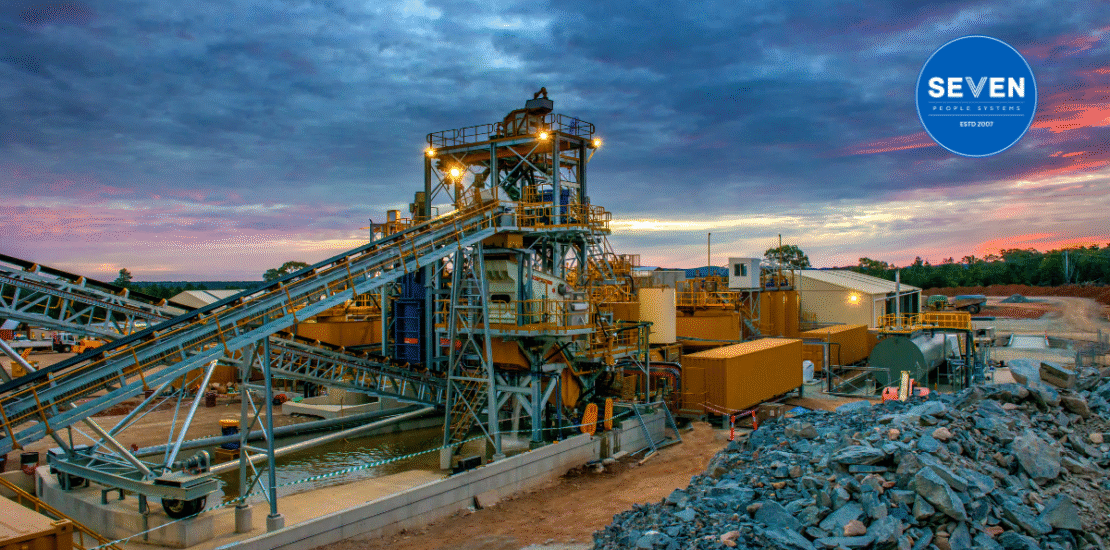
Mining operations across Jharkhand, Odisha, Chhattisgarh, Rajasthan, and Goa face a challenge that costs the Indian mining industry billions of rupees every year. Equipment failure is unpredictable, expensive, and dangerous. Fortunately, AI predictive maintenance for mining in India shifts mine operations from reactive repairs to proactive interventions. It prevents failures before they occur. Furthermore, AI equipment failure prediction in India analyses sensor data and vibration patterns to identify early warning signs of mechanical stress weeks before a breakdown. Meanwhile, machine learning applied across the extraction and logistics chain through AI mining operations optimisation in India reduces waste and cuts operational costs simultaneously. Additionally, AI downtime reduction for mining in India translates predictive maintenance into a measurable financial outcome — fewer unplanned stops and higher equipment availability.
Key Takeaways
- AI predictive maintenance for mining in India reduces equipment failures and minimizes unplanned downtime costs.
- AI equipment failure prediction in India utilizes sensor data to identify potential issues before breakdowns occur, improving operational efficiency.
- AI mining operations optimisation in India enhances overall productivity while reducing operational costs across the mining sector.
- The AI Mining certification in India equips mining professionals with the knowledge to implement AI solutions effectively.
- Implementing AI predictive maintenance for mining in India leads to significant financial savings and improved safety in mining operations.

Unlock the potential of AI in Mining™ to optimize exploration, improve resource management, and automate operations.
Self-paced course + Official exam + Digital badge
Seven People Systems is India’s authorised AI CERTs® training partner — delivering globally recognised AI certifications to professionals across every major Indian industry, including mining.
The Equipment Failure Crisis in Indian Mining
Equipment failure is the single largest source of unplanned cost in Indian mining operations. A single dragline failure at a coal mine in Jharkhand can halt production for days. A haul truck engine failure in a Rajasthan limestone quarry can cost more in lost production than the repair itself.
The Indian mining sector operates some of the most demanding equipment in any industry. Continuous miners, haul trucks, crushers, conveyors, pumps, and drilling rigs operate around the clock in harsh, abrasive environments. Consequently, component wear is constant and failure is inevitable — the question is when, not whether.
Traditional maintenance approaches address this through scheduled servicing — replacing components at fixed intervals regardless of their actual condition. This approach has two problems. It replaces components that still have significant useful life remaining — wasting money. It also misses failures that develop between scheduled service intervals — allowing genuine mechanical degradation to become catastrophic breakdown.
AI predictive maintenance for mining in India solves both problems simultaneously. It monitors actual equipment condition in real time — replacing components when they need replacement, not when the calendar says so. Furthermore, it identifies developing faults between service intervals — catching failures before they happen rather than responding to them after.
Seven People Systems trains mining professionals across India to implement these AI systems safely and effectively.
Unlock the potential of AI in Mining™ to optimize exploration, improve resource management, and automate operations.
Self-paced course + Official exam + Digital badge
AI Equipment Failure Prediction — How It Works in Indian Mining
AI equipment failure prediction in India operates by analysing multiple data streams simultaneously — finding the patterns that precede failure in the noise of normal operation.
Sensor Data Analysis
Modern mining equipment carries dozens of sensors measuring vibration, temperature, pressure, current draw, fluid levels, and operational speed. These sensors generate thousands of data points per minute. A human analyst cannot process this volume of data in real time — let alone identify the subtle deviations from normal baseline that indicate developing component stress.
AI models trained on historical equipment performance data do this continuously. When a haul truck’s wheel motor begins drawing slightly more current than its baseline — a pattern invisible to a human operator but detectable by an AI monitoring system — the system flags the anomaly immediately. A maintenance team in an Odisha iron ore mine that receives this alert two weeks before motor failure has time to schedule a planned replacement during a maintenance window. The same failure without AI prediction results in an unplanned breakdown at the worst possible moment.
Furthermore, AI equipment failure prediction in India improves continuously. Every failure event — whether predicted or missed — generates training data that makes the model more accurate. After six to twelve months of deployment, AI prediction accuracy in similar mining environments typically exceeds 90 percent for the failure types the model has been trained to identify.
Vibration Analysis and Bearing Health
Bearing failure is one of the most common causes of unplanned equipment downtime in Indian mining operations. Bearings in crushers, conveyors, and rotating equipment degrade gradually — generating characteristic vibration signatures that change as the bearing deteriorates. AI vibration analysis tools capture these signatures continuously, compare them against baseline readings, and generate remaining useful life estimates for every monitored bearing in the fleet.
A crushing plant manager in Chhattisgarh monitoring thirty bearings across a primary and secondary crusher circuit previously relied on manual vibration checks every two weeks. AI equipment failure prediction in India through continuous vibration monitoring gives the same manager a real-time dashboard showing the health status of every bearing — ranked by urgency. Consequently, maintenance resources go to the bearings that genuinely need attention rather than being distributed equally across all assets regardless of condition.
Thermal Imaging and Heat Pattern Analysis
Electrical faults, lubrication failures, and mechanical misalignments all generate heat signatures that precede visible failure. AI thermal imaging systems mounted on mining equipment capture infrared heat patterns continuously and flag anomalies that indicate developing faults. A mining operation in Goa using AI thermal monitoring on its electrical switchgear and motor drives identifies heat anomalies weeks before they develop into electrical fires or motor burnouts — preventing failures that would otherwise cause both significant financial loss and serious safety risk.
AI Mining Operations Optimisation — Beyond Maintenance
AI mining operations optimisation in India extends the value of AI beyond equipment health into every dimension of mine productivity.
Haul Truck Fleet Optimisation
Haul truck operations represent the largest single cost centre in most open-cut mining operations in India. AI fleet management systems analyse truck routes, loading cycles, dump cycle times, and traffic patterns — optimising dispatch decisions to maximise tonne-kilometres per shift. A coal mine in Jharkhand deploying AI fleet optimisation consistently achieves 8 to 12 percent improvement in haul truck productivity without adding equipment or personnel. Furthermore, AI fleet systems reduce fuel consumption per tonne — a significant operating cost saving for large fleet operations in Rajasthan and Madhya Pradesh.
Blast Design and Fragmentation Optimisation
Drilling and blasting account for a significant proportion of operating costs in hard rock mining across India. Poor blast design produces oversized fragmentation that increases crusher load and reduces throughput. AI blast design tools analyse rock structure data, explosive performance records, and fragmentation outcomes to generate optimised blast designs that produce the target fragmentation profile consistently. Consequently, crusher throughput improves, energy consumption per tonne decreases, and the downstream processing chain operates more efficiently.
Geospatial Resource Management
AI mining operations optimisation in India in exploration uses machine learning models to analyse geospatial data, seismic surveys, and historical drilling records — identifying mineral deposit locations and quality with significantly greater accuracy than traditional geological interpretation alone. Mining companies operating in Odisha’s iron ore belt and Rajasthan’s mineral-rich zones use AI geospatial tools to prioritise exploration drilling in areas with the highest probability of economic mineralisation — reducing exploration costs and time to resource definition.
AI Downtime Reduction for Mining — The Financial Case
AI downtime reduction for mining in India translates into direct, measurable financial benefit at three levels.
First, unplanned downtime cost elimination. An unplanned shutdown of a primary crusher in a large Indian iron ore operation can cost ₹50 lakh to ₹2 crore per day in lost production, depending on the operation’s throughput and the prevailing iron ore price. AI predictive maintenance for mining in India that prevents even two or three such events per year at a single mine generates financial returns that dwarf the cost of the AI system many times over.
Second, planned maintenance cost reduction. AI equipment failure prediction in India extends component life by ensuring replacement happens at the optimal point — not prematurely based on calendar schedules, and not catastrophically based on actual failure. Components used to their full useful life rather than replaced early consistently generate 15 to 25 percent reduction in maintenance material costs across large mining fleets.
Third, safety improvement. Unplanned equipment failures in mining are not just expensive — they are dangerous. Catastrophic mechanical failure of a haul truck, conveyor, or drilling rig creates serious risk to personnel. AI downtime reduction for mining in India through predictive maintenance reduces the frequency of catastrophic failure — directly improving the safety record of Indian mining operations in Jharkhand, Odisha, Chhattisgarh, and beyond.
Moreover, AI mining operations optimisation in India compounds these savings through fleet efficiency, blast optimisation, and resource management improvements that further reduce cost per tonne across the operation.
The AI Mining certification in India from Seven People Systems covers all of these applications — giving professionals the practical knowledge to implement, manage, and optimise AI systems across every dimension of mining operations.
Explore the AI+ Mining™ certification here.
Building Your AI Mining Programme — Step-by-Step
- Audit Your Equipment Failure History
Pull three years of maintenance records for your highest-value equipment — haul trucks, crushers, conveyors, and pumps. Identify the five failure types that caused the most unplanned downtime and the highest repair costs. These are your priority targets for AI equipment failure prediction in India. Start your AI programme here before expanding to lower-impact equipment.
- Assess Your Sensor Data Coverage
Identify which of your priority equipment assets already carry sensors collecting vibration, temperature, pressure, and current data. Determine whether this data is being stored and in what format. AI predictive maintenance for mining in India requires historical sensor data to train the AI model — the richer the data history, the faster and more accurate the model training.
- Select and Deploy AI Monitoring Tools
Choose AI monitoring tools suited to your priority failure types and data availability. Configure alert thresholds based on your historical failure data. Deploy monitoring on your highest-risk equipment first and validate the system’s predictions against known failure patterns before expanding to the full fleet.
- Integrate AI Alerts into Your Maintenance Workflow
Define exactly what action the maintenance team takes when the AI generates a predictive alert. Who investigates? Within what timeframe? What is the decision process for scheduling a planned intervention? AI downtime reduction for mining in India requires this workflow to be documented and practised before a live alert arrives.
- Expand to Fleet and Operations Optimisation
Once predictive maintenance is delivering consistent results, expand your AI mining operations optimisation in India programme to fleet management, blast design, and geospatial resource management. Each expansion requires new data integration and model configuration — plan each phase before deployment.
Unlock the potential of AI in Mining™ to optimize exploration, improve resource management, and automate operations.
Self-paced course + Official exam + Digital badge
FAQ
AI predictive maintenance for mining in India typically requires a minimum of six to twelve months of historical sensor data to train an initial prediction model. However, the system begins generating value earlier — flagging anomalies against the baseline it establishes from the first data collected. Consequently, the accuracy of AI equipment failure prediction in India improves continuously as more operational data accumulates.
Yes — and the economics are compelling at almost any scale. AI downtime reduction for mining in India at a small quarry operation in Rajasthan or a mid-size coal mine in Chhattisgarh generates the same proportional financial return as at a large iron ore operation.
The AI Mining certification in India covers AI-driven mineral exploration, AI predictive maintenance for mining in India, AI equipment failure prediction in India, fleet optimisation, geospatial analytics, environmental monitoring, workforce safety, AI mining operations optimisation in India, and strategic AI implementation in mining.
Final Thought
AI predictive maintenance for mining in India prevents the equipment failures that cost Indian mining operations billions of rupees every year. Consequently, AI equipment failure prediction in India catches developing faults weeks before they become catastrophic breakdowns. Furthermore, productivity improves, cost per tonne drops, and resource utilisation rises across the entire mine through AI mining operations optimisation in India. Moreover, all of this translates into a measurable financial outcome through AI downtime reduction for mining in India — transforming the economics of mining across Jharkhand, Odisha, Chhattisgarh, Rajasthan, Goa, and Madhya Pradesh. Therefore, the AI Mining certification in India from Seven People Systems gives every mining professional the knowledge to lead this transformation confidently.
Apply the six-step framework in this article to build your AI mining programme. Then formalise your expertise with the AI+ Mining™ certification from Seven People Systems — the AI CERTs® authorised training partner for mining professionals across India.
Visit Seven People Systems to explore the full range of AI certifications available for industry professionals across India.
Latest Blogs
- How to Drive Organizational Culture Change That Actually Sticks
- How to Ensure Your AI Systems Stay Compliant With Global Data Privacy Regulations
- How to Use AI in Finance Without Compromising Accuracy, Compliance, or Your Judgment
- How to Build AI-Powered Dashboards That Give Decision-Makers Real Answers, Not Just Data
- How to Use AI to Automate QA Testing and Catch Defects Before They Reach Customers